
 Mon - Sun 8:00 - 19:00
Many Australian patients face overwhelming financial barriers when seeking maxillofacial reconstruction, prompting a direct evaluation of the exact cost of bone grafting in Vietnam. In Australia, a minor bone graft typically ranges from $500 to $1,500 AUD, while a complex sinus lift can easily escalate beyond $5,000 AUD. In stark contrast, top-tier dental facilities in Hanoi offer the exact same clinical procedures using premium Swiss biomaterials for strictly between $300 and $800 AUD. The exact cost of bone grafting in Vietnam depends on the volume of material required for your jaw, usually measured in grams. By choosing internationally certified clinics in Vietnam, patients bypass exorbitant domestic fees while securing advanced 3D-guided surgical precision. Ultimately, patients can save thousands on their overall dental bone graft cost by traveling abroad, ensuring a completely stable anatomical foundation for long-lasting titanium implants.
The Financial Reality of the Australian Dental Crisis
The structural deterioration of your jawbone begins immediately following a tooth extraction. Without the mechanical load of chewing, the bone undergoes aggressive resorption. It shrinks horizontally. It collapses vertically. This rapid physiological decline presents a severe structural challenge for restorative dentistry. You cannot anchor a medical-grade titanium screw into thin air. A solid foundation is an absolute biological necessity.
However, solving this biological problem in Australia often creates a catastrophic financial crisis for working families and retirees. Independent clinical data and national dental fee reports reveal that foundational surgical preparations frequently cost more than the artificial tooth itself. To understand why traveling to Southeast Asia has become a primary medical strategy for thousands of international patients, we must fundamentally dissect these domestic numbers.
Based on comprehensive data from independent national dental fee reports and health cover providers, a straightforward dental implant in Australia can range between $3,000 and $5,500 AUD per tooth. This base fee covers standard item numbers such as 012 (Periodic Oral Exam), 661 (Implant Abutment), and 672 (Full Crown to Implant). But here is the critical caveat. This price assumes you have perfect bone density. If your jawbone has degraded and you require a bone graft or a sinus lift, the cost for a single restored tooth can skyrocket to an astonishing $11,500 AUD.
Patients are routinely shocked when presented with these treatment plans. Private health insurance in Australia provides minimal relief. Major dental cover policies often max out at a few thousand dollars annually, leaving the patient to pay the vast majority of these specialized surgical costs entirely out of pocket. For a senior citizen needing multiple implants or a full-mouth reconstruction, the domestic financial burden easily exceeds $30,000 to $60,000 AUD. This economic reality forces many Australians to live with painful, ill-fitting dentures or severely compromised oral function.
Detailed Price Comparison: Australia vs. Vietnam
Analyzing the financial breakdown reveals a staggering contrast between domestic Australian pricing and international medical alternatives. When researching the cost of bone grafting in Vietnam, the price is never a flat fee; it is meticulously categorized by the anatomical complexity of the surgical site and the sheer volume of biomaterial required.
In Australian clinics, a minor bone graft—often referred to as socket preservation performed immediately after pulling a single tooth—costs between $500 and $1,500 AUD, according to recent Australian dental cost evaluations. This is the simplest tier of grafting. If the tooth has been missing for years and the jaw has thinned into a sharp edge, the surgeon must perform a ridge augmentation. Rebuilding this width and height before implants can be placed pushes the Australian cost to between $1,500 and $4,000+ AUD.
The most expensive pre-implant procedure is the sinus lift. Located in the upper jaw, the maxillary sinuses are hollow, air-filled cavities. When upper molars are extracted, the bone floor dividing the mouth from the sinus drops down. Attempting to place an implant here without preparation would brutally puncture the delicate Schneiderian membrane. Elevating this membrane and packing bone underneath it is a highly sensitive microsurgical procedure. Consequently, the sinus lift cost in Australia typically ranges from $1,500 to $5,000+, depending on whether it is a unilateral or bilateral procedure.
Meanwhile, top-tier international clinics in Hanoi provide an all-inclusive, radically transparent pricing structure. The fees for major grafting procedures range strictly from $300 to $800 AUD. This figure encompasses the surgical intervention, the specialized osteoconductive biomaterial, and the protective collagen membrane.
| Surgical Intervention | Average Cost in Australia (AUD) | Premium Clinics in Vietnam (AUD) | Estimated Savings |
| Minor Graft / Socket Preservation | $500 – $1,500+ | $300 – $400 | Up to 73% |
| Ridge Augmentation (Width/Height) | $1,500 – $4,000+ | $400 – $600 | Up to 85% |
| Sinus Lift (Unilateral Elevation) | $1,500 – $5,000+ | $300 – $800 | Up to 84% |
| Full-Arch Rehabilitation (All-on-4) | $20,000 – $35,000 | $5,000 – $10,000 | Up to 70% |
Visualizing this data clarifies the immense financial relief available to medical tourists, proving that world-class rehabilitation does not require bankruptcy.
To ensure absolute clarity regarding your specific anatomical needs, our clinicians provide fully itemized quotes right from the initial digital consultation.
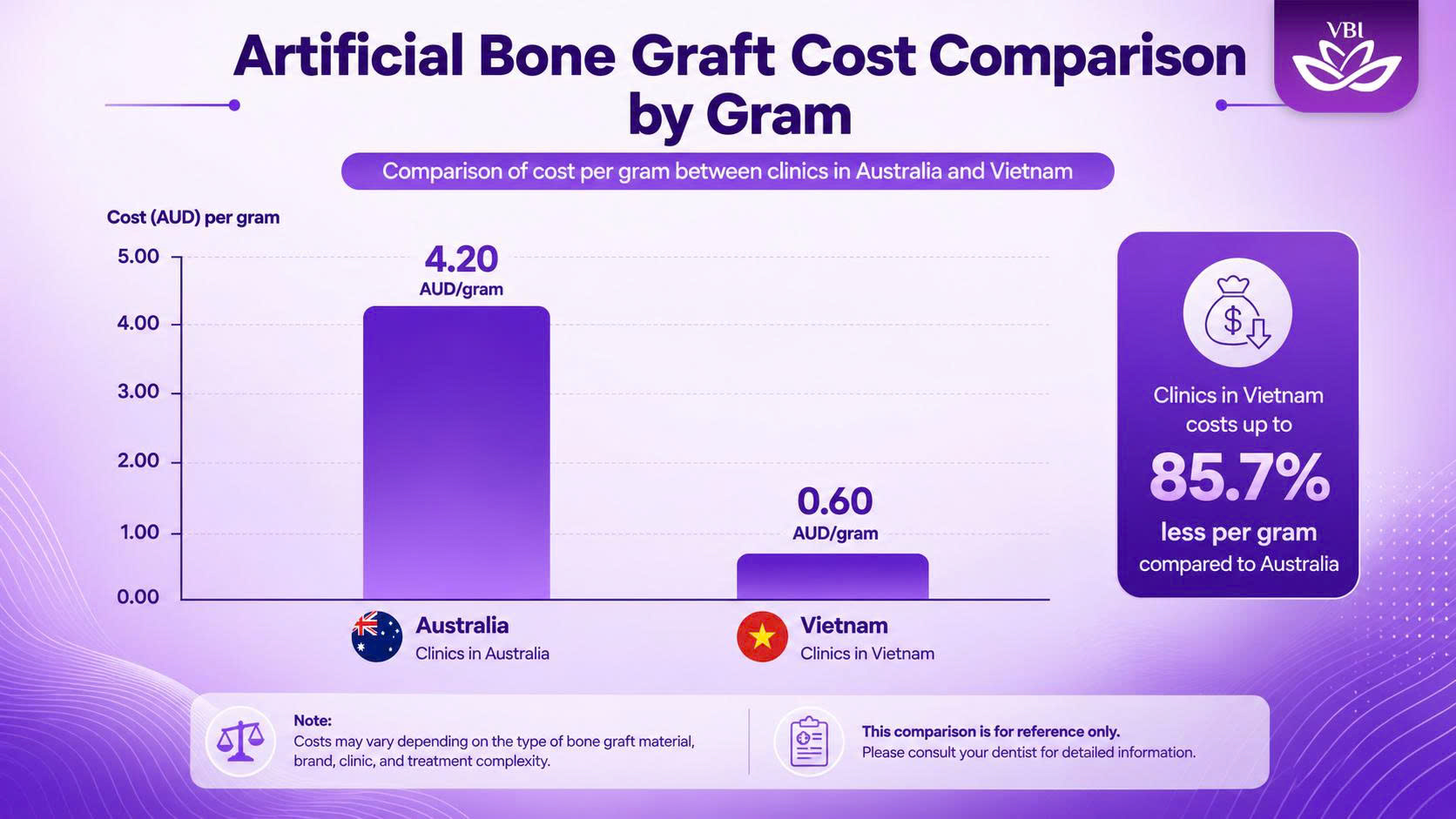
This direct approach completely eliminates the paralyzing fear of hidden fees or unexpected post-surgical charges that plague the domestic dental industry.
The Economics of Maxillofacial Surgery: Why the Price Gap?
It is critically important to understand that Australian oral surgeons and periodontists are not arbitrarily inflating prices to exploit patients. The astronomical domestic fees are the unavoidable consequence of operating within a high-cost economic ecosystem.
Operating a specialized surgical facility in metropolitan hubs like Sydney, Melbourne, or Brisbane requires navigating immense overhead expenses. Commercial medical real estate demands premium rent. Medical malpractice insurance premiums for implantologists are exceptionally high. Add the mandatory wages for specialized anesthetic staff, strict regulatory compliance costs, and the high import taxes levied on European surgical equipment, and the baseline operational cost skyrockets before a single scalpel is lifted.
How can elite clinics in Vietnam offer the exact same surgical procedure for up to 80% less? To fully comprehend the cost of bone grafting in Vietnam, the answer lies purely in macroeconomics, not a compromise in clinical standards.
Vietnam possesses a significantly lower cost of living and a favorable currency exchange rate. Commercial rent in the historic Hanoi Old Quarter, while premium for the local Vietnamese market, represents a mere fraction of Sydney real estate prices. Salaries for highly trained clinical assistants, dental hygienists, and administrative support staff are adjusted to the local Southeast Asian economy. However, the standard of clinical excellence, the academic pedigree of the surgeons, and the physical biomaterials used remain rigidly international. The profound financial savings are passed directly to the patient, enabling highly affordable access to world-class medical interventions.
Material Transparency: The Geistlich Bio-Oss Standard
When assessing your surgical quote, you must ask one vital question: what physical material is being permanently embedded into my skull? The physical biomaterial constitutes a major portion of the surgical bill. Many budget clinics, both locally and abroad, attempt to cut overhead costs by using unverified, generic synthetic compounds or cheap alloplasts that frequently fail to integrate properly.
At leading international facilities in Hanoi, material transparency is an absolute clinical mandate. We exclusively use premium, globally recognized biomaterials. The gold standard in regenerative dentistry is Geistlich Bio-Oss, a sterile, highly purified bovine xenograft manufactured in Switzerland. Backed by over 800 peer-reviewed clinical studies, it is the most documented and trusted bone replacement material in modern dental history.
The Architecture of Cellular Regeneration
Why is a bovine (cow-derived) xenograft superior to synthetic alternatives? Geistlich Bio-Oss is engineered to mimic human bone mineral architecture almost perfectly. It provides an ideal, highly interconnected pore system. The micropores within the material ensure rapid and efficient fluid intake, instantly absorbing your autogenous blood upon placement. The larger macropores permit the unimpeded migration of your own bone-building cells.
This material provides excellent osteoconduction. It acts as a biological scaffold. Think of it as the intricate wooden framework used by engineers before pouring concrete. Your body recognizes this porous Swiss material as a friendly structure and dispatches specialized cells called osteoblasts to the surgical site. These osteoblasts crawl deep into the microscopic pores of the Bio-Oss granules and begin secreting new, living human bone tissue (osteogenesis). Simultaneously, your body builds a rich network of tiny blood vessels (angiogenesis) to nourish the healing area.
Crucially, Geistlich Bio-Oss features a very slow resorption rate. While highly cellular autologous bone grafts (bone harvested directly from your own hip or chin) tend to resorb and shrink too quickly before structural stabilization occurs, Bio-Oss maintains its volume perfectly over time. This long-term volume stability is the ultimate prerequisite for high implant survival rates.
Pricing the Gram: Global Material Costs
The pricing of this premium Swiss material is highly precise. It is distributed to surgeons worldwide in sterile, vacuum-sealed vials meticulously measured in grams and cubic centimeters (cc). By strictly itemizing the exact gram weight used in your surgery, elite clinics eliminate any financial ambiguity.
A single 0.5g (roughly equivalent to 1cc or 1.5cc depending on granule size) vial of Bio-Oss typically covers a minor socket preservation. Extensive reconstructive work, such as a bilateral sinus lift, demands significantly higher volumes, often requiring 2.0g or more. Global medical supply data reveals the high baseline cost of these materials. In international markets, a standard 1.0g vial of small granules wholesales for hundreds of dollars, while larger 2.0g packs command premium pricing. In Australia, the mark-up applied to these imported materials by local distributors further inflates the final patient invoice.
Top clinics in Vietnam import these exact same Geistlich vials directly. We ensure that every patient can physically verify the authentic, factory-sealed Swiss packaging before the anesthesia is even administered.
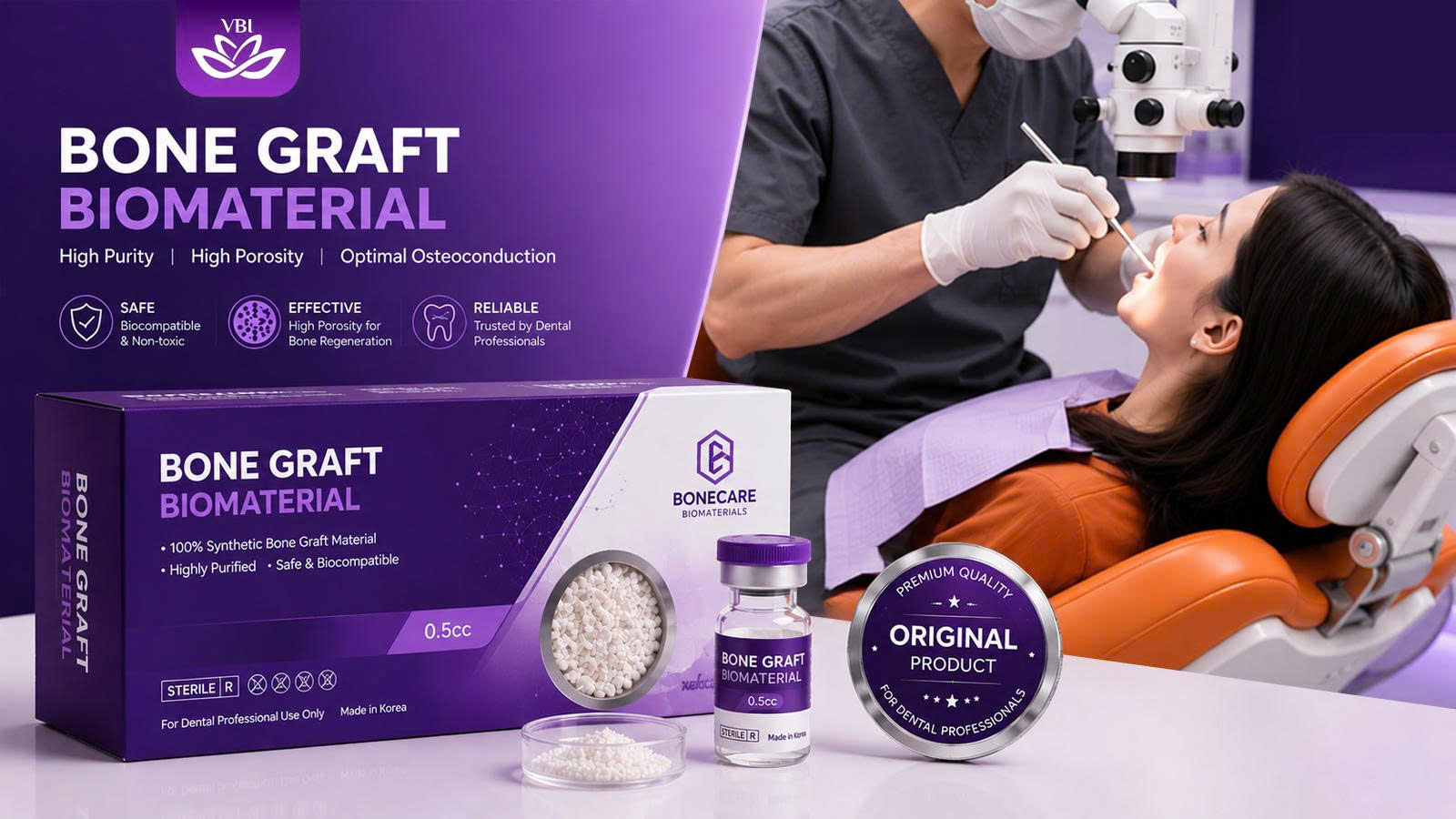
This rigorous transparency protocol guarantees that you are receiving the pinnacle of European biomaterial science at a fraction of the domestic Australian price, which directly lowers the overall cost of bone grafting in Vietnam.
The Biological Imperative: Why You Cannot Skip the Graft
Patients facing severe budget constraints frequently ask if they can simply bypass the grafting phase and force the titanium implant into whatever thin bone remains. The definitive clinical answer is no.
Attempting to anchor a medical-grade titanium fixture into soft, degraded, or severely resorbed bone guarantees catastrophic surgical failure. The human jaw is not uniform. The maxilla (upper jaw) is naturally made of softer, sponge-like trabecular bone (Type D3 or D4 bone), while the mandible (lower jaw) is typically denser. When severe resorption occurs, even the lower jaw loses its structural integrity. Placing an implant into this compromised environment is akin to driving a heavy metal screw into wet drywall. It will lack primary stability.
Primary stability is the immediate, mechanical tightness of the implant achieved on the exact day of surgery. Without this rock-solid friction, the implant will suffer from micro-movements during the healing phase. If the titanium post moves even a fraction of a millimeter while you chew, the biological process of osseointegration will fail. Your body will respond to the instability by growing soft, fibrous scar tissue around the metal threads instead of solid bone.
Once fibrous encapsulation occurs, the implant is entirely useless. It will harbor aggressive bacterial pathogens, leading to a severe inflammatory disease known as peri-implantitis. The surrounding gum tissue will swell, bleed, and discharge pus as the infection rapidly destroys any remaining bone structure. Ultimately, the failed implant will loosen and fall out, leaving a massive anatomical defect that requires even more expensive and painful reconstructive surgery to repair.
Investing in a proper bone graft is not an optional luxury; it is the non-negotiable biological foundation required to ensure that your new teeth last a lifetime. Understanding the cost of bone grafting in Vietnam ensures that this vital step remains affordable. You should read our comprehensive guide regarding the timeline and biological phases of a bone graft for dental implants to fully grasp the necessary recovery protocols.
Modern Surgical Protocols: Eliminating Pain and Trauma
The phrase “bone grafting” inherently triggers severe dental anxiety. Many older adults envision traumatic surgeries involving chisels, mallets, excessive bleeding, and weeks of agonizing recovery. While this may have been true decades ago, modern maxillofacial surgery in Hanoi has entirely abandoned these archaic, invasive methods.
Today, elite oral surgeons use advanced ultrasonic piezosurgery. This revolutionary technology replaces traditional rotary drills with an instrument that emits high-frequency micro-vibrations. These ultrasonic waves are specifically calibrated to cleanly and precisely cut through hard, calcified bone tissue while leaving surrounding soft tissues completely untouched.
The safety profile of piezosurgery is astonishing. If the vibrating tip accidentally brushes against a vital structure—such as the delicate Schneiderian membrane located inside the sinus cavity, or the inferior alveolar nerve running through the lower jaw—it simply stops cutting. It cannot lacerate soft tissue.
The clinical result is a highly predictable, ultra-precise surgical intervention. It creates a practically bloodless operative field, dramatically minimizes surgical tissue trauma, and entirely eliminates the severe bruising commonly associated with traditional oral surgery. Consequently, the recovery period is exceptionally fast. Most international patients require nothing stronger than basic, over-the-counter anti-inflammatory medication (like Ibuprofen) within 48 hours of the procedure, allowing them to comfortably enjoy their dental vacation in the Hanoi Old Quarter.
Precision Navigation: The Role of 3D CBCT Scanning
The success of your bone graft, and the subsequent placement of your titanium implant, relies entirely on digital precision. Before any surgical intervention occurs, top clinics perform a comprehensive Cone Beam Computed Tomography (CBCT) scan.
Unlike traditional flat 2D X-rays, a CBCT machine captures a high-resolution, volumetric 3D map of your entire skull. The software allows the surgeon to visualize the exact thickness and density of your remaining bone, pinpoint the precise location of hidden nerve canals, and measure the exact millimeter depth of your sinus cavities.
Using this data, the surgical team virtually plans the entire procedure on a computer monitor. They calculate the exact volume of Geistlich Bio-Oss granules required. They determine the optimal angle and depth for the future implant. This digital blueprint is then sent to a high-precision 3D printer, which manufactures a custom surgical guide.
During the operation, this acrylic guide snaps securely over your gums. It features perfectly angled metal sleeves that physically restrict the surgeon’s instruments, ensuring the procedure is executed exactly as planned on the computer. There is absolutely no guesswork. Because of this extreme digital accuracy, surgeons can often perform “flapless” surgery, meaning they do not need to slice open your gums with a scalpel to visually locate the bone. Flapless surgery slashes healing times and drastically reduces postoperative discomfort.
Integrating the Graft with Premium Implant Systems
Once your newly grafted bone has fully healed and solidified—a biological process that typically takes between four and six months—you are ready for the placement of the artificial titanium roots. The quality of the grafted bone must be matched by the quality of the implant system itself.
Leading clinics in Vietnam offer the world’s most advanced implant brands, ensuring absolute biological compatibility with your new jawbone. Depending on your specific anatomical needs and budget, surgeons will recommend systems from Switzerland, the United States, or South Korea.
The Pinnacle of Swiss Engineering: Straumann and Nobel Biocare
For patients demanding the absolute highest tier of clinical performance, European luxury systems are available at a fraction of their domestic cost. Straumann implants, manufactured in Switzerland, use a proprietary alloy called Roxolid (a blend of Titanium and Zirconium) and feature the revolutionary SLActive surface technology. This super-hydrophilic surface actively draws blood and healing cells into the microscopic threads of the implant, dramatically accelerating the healing timeline from several months down to just three to four weeks. In Australia, a single Straumann implant can cost a fortune, but in Vietnam, the premium SLActive fixture is highly accessible at roughly $2,800 AUD.
Similarly, Nobel Biocare remains the ultimate global choice for complex full-mouth rehabilitations. Renowned for their incredible survival rates exceeding 98% even in high-risk immediate loading cases, a Nobel Biocare implant in Hanoi costs approximately $2,240 AUD.
High-Performance Value: Osstem and Dentium (South Korea)
For patients seeking phenomenal clinical safety combined with aggressive cost savings, premium South Korean brands offer the perfect solution. Brands like Osstem and Dentium dominate the Asian market and rival European systems in long-term success rates.
Dentium implants, for example, feature a highly pronounced tapered body. This brilliant engineering design compresses the soft, newly grafted trabecular bone as the implant is inserted. This compression forces the bone to pack tightly around the threads, generating spectacular primary stability even in compromised jawbones.
Furthermore, Korean implants use advanced SLA (Sandblasted, Large grit, Acid-etched) surface technology to create a highly porous microscopic surface that promotes rapid osseointegration. In Australia, clinics routinely charge $3,000 to $7,000 AUD for these fixtures, while the exact same authentic Osstem or Dentium implant in Hanoi costs merely $900 to $1,500 AUD. When combined with an affordable dental bone graft cost, the total financial package is life-changing for international patients.
For a detailed breakdown of the total expenses involved, including the surgical phase and the final ceramic crowns, review our comprehensive analysis of Vietnam dental implant costs.
The All-on-4 Protocol: An Alternative to Bone Grafting
While bone grafting is highly effective, some older adults present with such severe, catastrophic bone loss that massive bilateral sinus lifts and extensive block grafting are deemed too invasive. The prospect of multiple surgeries, intense morbidity, and a year-long healing process can be daunting.
For these specific patients suffering from complete tooth loss (edentulism), advanced clinics offer a revolutionary alternative that completely bypasses the need for bone grafting: The All-on-4 or All-on-6 protocol.
This global gold standard involves placing a full arch of permanent, fixed teeth on just four or six strategically placed implants. The engineering breakthrough lies in the geometry. While the two front implants are placed vertically into the dense bone at the front of the jaw, the two posterior (back) implants are deliberately tilted at a sharp 30 to 45-degree angle.
By aggressively angling these titanium posts backwards, the surgeon completely avoids the hollow maxillary sinus cavities in the upper jaw and safely bypasses the vital inferior alveolar nerve canal in the lower jaw. You avoid the painful sinus lift entirely. Furthermore, this angled placement anchors the implants deep into the strongest available anterior basal bone, providing a massive, highly stable foundation capable of supporting a full fixed bridge immediately.
Known clinically as “Teeth-in-a-Day” or immediate loading, this protocol allows the patient to walk into the clinic with failing teeth and walk out within 24 to 48 hours with a beautiful, fully functional set of fixed provisional teeth. In Australia, restoring a single arch with the All-on-4 method easily costs between $20,000 and $35,000 AUD. In Hanoi, using premium Korean or European components, the exact same life-changing procedure costs between $5,000 and $10,000 AUD per jaw, delivering up to 75% in total savings.
Uncompromising Infection Control: AAMI Sterilization Standards
A heavily discounted surgical fee is entirely meaningless if the clinical environment compromises your physiological safety. When traveling abroad for invasive oral surgery, your primary concern must be stringent infection control. Unverified, budget-focused “dental tourism” traps often cut corners on sterilization, leading to horrific cross-contamination and severe post-operative infections that destroy the newly placed bone graft.
You must demand radical transparency regarding hygiene. Top international dental hospitals in Vietnam operate under rigid AAMI (Association for the Advancement of Medical Instrumentation) sterilization standards. This is the exact same strict regulatory framework governing major hospital operating rooms in Sydney and Melbourne.
The decontamination protocols are ruthless and absolute. Every single surgical instrument undergoes a rigorous, closed-loop sterilization cycle.
-
Instruments are manually scrubbed and placed into ultrasonic chemical baths to dissolve all biological debris.
-
They are chemically disinfected using hospital-grade biocides.
-
The instruments are individually sealed in airtight sterile pouches.
-
Finally, they are baked inside Class B fractionated vacuum autoclaves. These machines use intense pressurized steam and deep vacuums to penetrate every microscopic crevice, guaranteeing the 100 percent destruction of all viral, bacterial, and fungal pathogens, including Hepatitis and HIV.
By combining flawless surgical sterility with imported, highly purified Swiss biomaterials like Geistlich Bio-Oss, the risk of postoperative infection or graft rejection is reduced to an absolute statistical anomaly.
Post-Operative Care: Protecting Your Investment
Following your bone grafting procedure, strict adherence to post-operative protocols is vital to ensure the survival of the osteoconductive matrix. The first 48 hours are critical for establishing a stable blood clot inside the surgical site. This fragile clot acts as the biological scaffolding where bone-building cells will begin their regenerative work.
Patients must entirely avoid rinsing their mouth, spitting forcefully, smoking, or drinking through a straw during the first 24 hours, as the vacuum pressure can violently dislodge the clot. Starting on day two, patients transition to a gentle, hypertonic saltwater protocol. Mixing half a teaspoon of regular salt into warm water and holding it gently over the surgical site keeps the area free of bacteria without using harsh, chemical-heavy mouthwashes that can irritate young, healing tissues.
Furthermore, a soft food diet is mandatory. The surgical site needs absolute stillness to properly fuse. Any micro-movements caused by aggressively chewing hard foods can disrupt the collagen membrane and displace the bone granules, leading to surgical failure. Your clinical team in Hanoi will provide detailed, printed instructions in English and precise pharmacological pain management plans to ensure your recovery is smooth and entirely predictable.
Navigating Your Medical Journey with Confidence
The structural integrity of your facial profile, your ability to digest food properly, and the fundamental mechanics of your smile hinge entirely on the dense volume of your jawbone. You do not have to accept the catastrophic prices quoted in your local capital city, nor do you have to abandon the hope of a permanent, fixed smile due to financial constraints.
By strategically choosing highly regulated medical tourism in Vietnam, you combine a restorative, stress-free vacation with elite, uncompromising clinical execution. You regain your anatomical health, secure the perfect biological foundation for your future titanium roots, and fiercely protect your family’s financial stability by optimizing the cost of bone grafting in Vietnam.
To eliminate financial uncertainty and receive a precise evaluation of your anatomical needs, reach out to our International Patient Support team via WhatsApp or Email today. Request a detailed quotation for auxiliary treatments, completely customized to your 3D CBCT scan.




Bài viết liên quan
VND to AUD Dental Price Converter: Calculate Your Hanoi Dental Holiday Savings
Transparency First: Why We Provide Real-Time Currency Conversion For international patients traveling from Australia and...
Emax Veneers in Vietnam: Price, Lifespan & Minimally Invasive Smile Makeovers
Medical and Financial Disclaimer: Dental tourism outcomes depend heavily on individual clinical suitability, pre-existing oral...
Porcelain Crowns Price Vietnam: 2026 Cost Comparison vs Australia & NZ
For many patients in Australia and New Zealand, major restorative dental work feels like an...
All-on-4 Dental Implants Cost in Vietnam: Ultimate Pricing Guide
Clinical Disclaimer: The information in this pricing guide is for educational purposes and does not...
Minimal Prep Veneers Cost in Vietnam: Save up to 70% Compared to AU/NZ
Clinical and financial planning for cosmetic dentistry can be overwhelming, especially when local private fees...
Affordable Korean Dental Implants in Vietnam: Osstem & Dentium
Finding affordable Korean dental implants in Vietnam is a highly effective strategy for Australian patients...