
 Mon - Sun 8:00 - 19:00
Seeking affordable dental care abroad sounds highly appealing. But what are the actual cheap dental implants risks you should watch out for? The reality is sobering. Opting for rock-bottom prices often leads to catastrophic mechanical and biological failures. These include severe implant screw loosening, painful infections, and progressive bone loss. Many budget clinics overseas cut corners on essential clinical protocols. They use unverified titanium alloys containing toxic metallurgical impurities. They also rush biological healing times to fit tight vacation schedules. This hasty approach triggers fibrous encapsulation, causing the jawbone to reject the artificial root entirely. Ultimately, what seemed like a bargain can quickly double your medical bills. You are forced to pay for emergency removals and complex reconstructive surgeries. Do not compromise your long-term health. Understanding these hazards is the first step toward protecting your oral health and securing a truly successful restoration.
The Australian Dental Association (ADA) officially warns that choosing unregulated dental treatments overseas dramatically increases the rate of severe post-operative clinical failures. According to dental biomechanics studies published in the Journal of Orofacial Rehabilitation, approximately 50.4% of all implant screw loosening incidents occur within the first six months of loading. This early mechanical failure is primarily driven by the settling effect and immediate loss of preload tension rather than progressive material fatigue. Furthermore, ADA policy guidelines emphasize that overseas clinics often utilize materials not approved by regulatory bodies like the Therapeutic Goods Administration (TGA), leaving patients with no legal recourse or local warranty options.
What Are the Biological and Mechanical cheap dental implants risks?
The primary biological and mechanical dangers of cheap implants stem from subpar metallurgical purity and deficient prosthetic engineering. Using low-grade titanium alloys containing toxic impurities triggers chronic localized inflammation, leading to accelerated bone resorption. Mechanically, poor thread design and inadequate torque control cause immediate preload loss, culminating in recurrent screw loosening and eventual implant fracture.
When evaluating restorative options, patients must be fully aware of the cheap dental implants risks before choosing an unverified clinic. The price difference of cheap implants is often achieved by ignoring strict mechanical and biological guidelines.
Understanding the dangers of cheap implants goes beyond the fear of surgical pain. Sub-standard manufacturing results in a high tolerance gap between the implant and the abutment. This discrepancy causes structural instability and micro-movements under normal biting forces.
The stability of the implant relies on “preload”—the clamping force created when the screw is tightened. In cheap systems, high surface micro-roughness dissipates up to 90% of the rotational energy into friction, leaving only 10% for the clamping force.
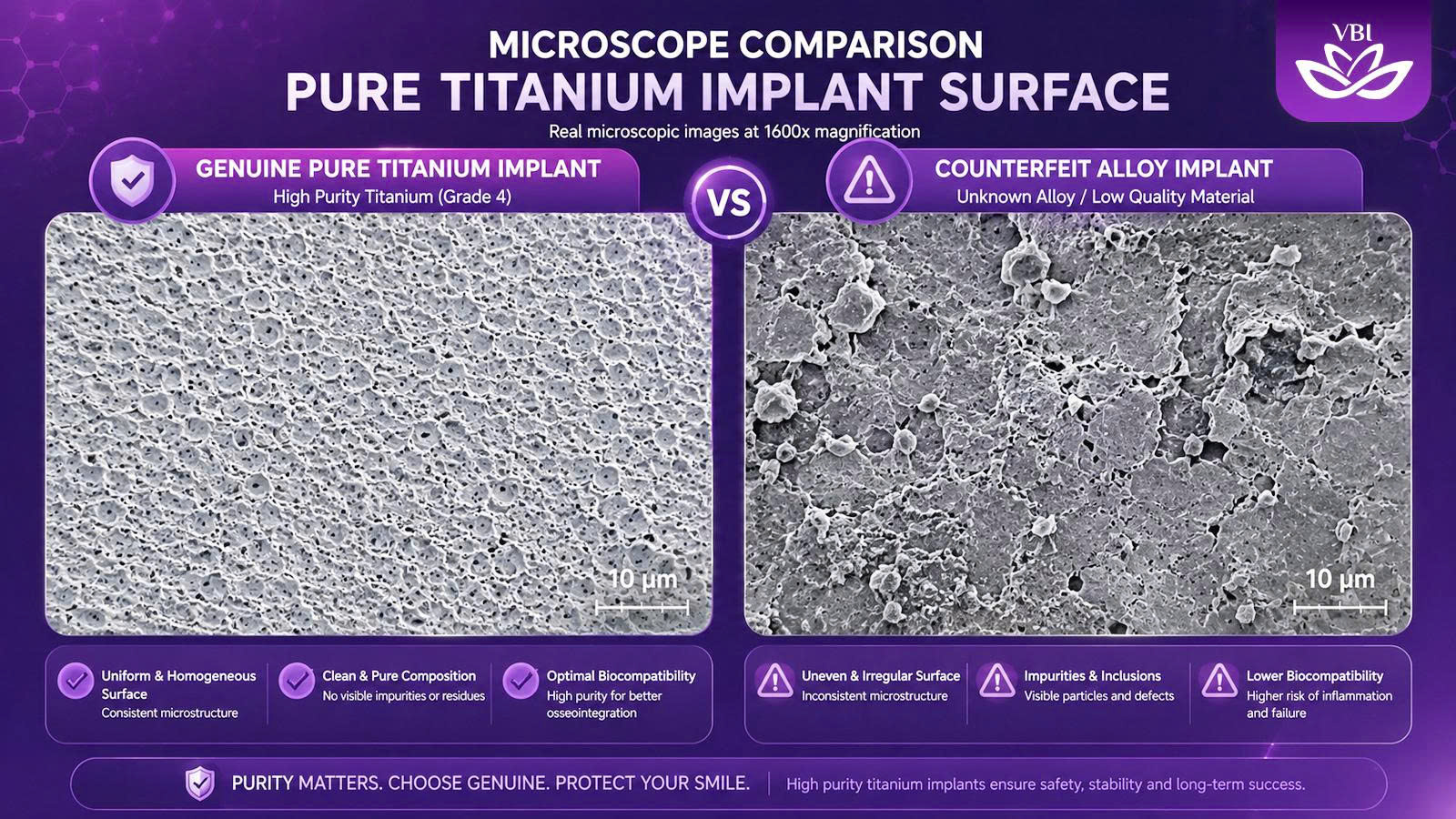
Furthermore, Grade 5 titanium alloys containing vanadium (Ti-6Al-4V) are easier to machine but release toxic metal ions under fretting corrosion. This triggers localized immune responses that destroy bone-building cells, leading to bone loss.
To visualize the structural differences under microscopic evaluation, we can compare high-grade and low-grade dental materials.
Why Does Rushing the Healing Process Cause Bone Loss and Implant Rejection?
Rushing the healing process to fit a short holiday schedule directly violates the laws of human bone biology. Successful osseointegration requires months of undisturbed healing for osteoblasts to form solid bone around the titanium. Subjecting the implant to immediate loading forces too early induces micro-movements, which trigger fibrous encapsulation—forming weak scar tissue instead of strong bone.
Many cases of dental tourism complications are reported by international dental associations. These issues often occur because “immediate loading” or “teeth-in-a-day” offers are marketed aggressively to international travelers.
However, the biological reality of bone healing cannot be artificially accelerated. When evaluating the clinical landscape, many overseas patients overlook these cheap dental implants risks, focusing purely on the initial quote.
In the first few weeks, bone cells (osteoblasts) migrate to the implant surface to establish a biological bond. If bite forces are introduced prematurely, micro-movements of just a few microns tear these delicate cellular connections.
The body responds by wrapping the implant in soft, fibrous tissue (scar tissue). This is known as fibrous encapsulation, which prevents true bone integration and leads to mobile, failing implants. Undue strain on an unintegrated implant causes rapid localized bone loss (bone resorption), leaving the patient with a destroyed jawbone. Avoiding dental tourism complications requires thorough research into sterilization protocols and biological timelines.
Understanding these biological timelines is crucial, as is evaluating the cleanliness of the surgical environment where the treatment takes place.
What Are the Structural Risks of Sub-standard Infection Control?
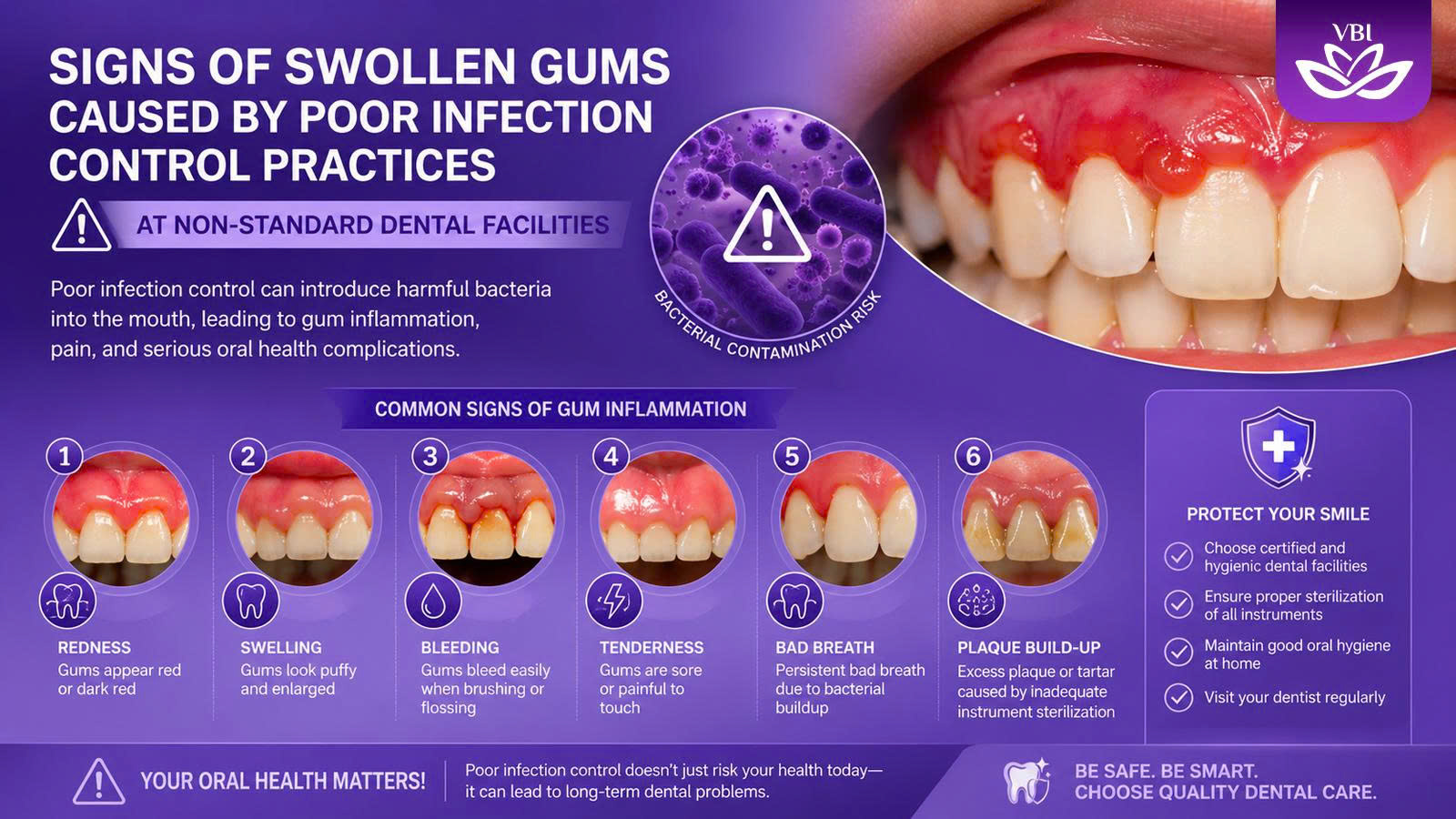
Sub-standard infection control in low-cost overseas clinics introduces pathological bacteria directly into the open surgical site. Without strict hospital-grade sterilization, pathogens colonize the microscopic interface between the implant and abutment. This causes aggressive peri-implantitis, a specialized form of gum disease that rapidly destroys the supporting bone and leads to complete implant failure.
The dangers of cheap implants are not limited to mechanical faults; they pose severe systemic health risks. Sub-standard machining creates a microgap (ranging from 10 to 135 microns) at the implant-abutment connection. This microgap becomes a breeding ground for bacteria that cannot be cleaned by normal brushing.
As the screw loosens, the gap pumps bacteria into the surrounding soft and hard tissues. This triggers chronic inflammation, leading to pus, bleeding, and bone loss.
While clinics in Australia operate under strict infection control standards mandated by the ADA, many low-cost overseas clinics do not undergo rigorous independent audits. Understanding the cheap dental implants risks is crucial to saving your smile. If you suspect your current restoration is failing, you must begin by identifying implant failure signs to seek corrective treatment before permanent bone damage occurs. Also, reviewing official dental tourism warnings can help you understand the standard of care differences.
How Can You Prevent Implant Screw Loosening and Restore Stability?
Preventing implant screw loosening requires utilizing high-grade components and executing a precise dual-torque tightening protocol. Clinicians must apply a second retorquing force exactly 10 minutes after the initial insertion to compensate for the settling effect, where microscopic surface irregularities flatten under load. This simple mechanical step recovers up to 40% of the lost preload, securing the prosthetic connection permanently.
To secure long-term success, modern implantology focuses heavily on biomechanics. No metal surface is perfectly smooth. Under initial tightening, contact occurs only at microscopic peaks (asperities). These peaks undergo plastic deformation within minutes, causing the components to settle closer and eroding 2% to 10% of the clamping force immediately.
Our specialists in Hanoi always educate international tourists on these cheap dental implants risks so they can make informed, biological-first decisions. Standard clinical guidelines dictate torquing the screw, waiting 10 minutes for embedment relaxation to occur, and then retorquing to the manufacturer’s specified Ncm.
Additionally, high-quality restorations utilize Grade 23 titanium alloy screws, which possess superior elasticity. This allows the screws to bend slightly under extreme lateral bite forces without snapping. Cheap implants often use rigid, brittle alloys that fracture easily.
If you are currently experiencing any mobility, discomfort, or swelling around your implant, do not wait for a complete failure. Contact our international patient team at Viet Bi Dental today. You can message us instantly via Whatsapp) or fill out our online Contact Form to schedule an urgent clinical diagnostic check-up with our English-speaking experts. We are located right in the heart of Hanoi Old Quarter to provide safe, internationally-compliant corrective care.




Bài viết liên quan
Early Signs of Gum Disease: A Self-Check Checklist and Treatment Options for Hanoi Expats
Living as an expatriate in Hanoi offers rich cultural experiences, exceptional cuisine, and a dynamic...
Periodontitis Treatment Stages I–III: European Federation of Periodontology (EFP) Protocols in Hanoi
Managing complex gum infections requires a precise, evidence-based clinical strategy. At Viet Bi Dental Clinic...
Professional Dental Cleaning Frequency: Long-Term Gum Health Guidelines for Expats Residing in Hanoi
Living in Hanoi as an expatriate offers a rich tapestry of experiences, from historic architecture...
Professional Teeth Whitening vs. At-Home Kits: Safety, Effectiveness, and Enamel Preservation
Achieving a bright, confident smile is a primary goal in cosmetic dentistry, yet the path...
Composite Bonding vs. Porcelain Veneers for Gap Closure: An Objective Guide for Australian Patients
For many patients in Sydney, Melbourne, or Brisbane, dealing with a prominent gap between the...
Dental Insurance Invoice in Vietnam: Expat & Tourist Reimbursement Guide
Getting dental treatment abroad can save you thousands of dollars, but navigating the administrative process...