
 Mon - Sun 8:00 - 19:00
A complete full mouth restoration vietnam package includes advanced digital planning and premium materials to permanently replace missing teeth. This procedure is specifically designed for international patients suffering from severe tooth loss, chronic gum disease, or a collapsed bite. By utilizing fixed prosthetics like All-on-4 or All-on-6 implant systems, specialized oral surgeons can fully restore your vertical dimension of occlusion (VDO). This is the natural facial height required for proper chewing, speaking, and joint alignment. The comprehensive treatment timeline typically requires a 7 to 14-day stay in Hanoi. This encompasses initial 3D CBCT scans, the guided surgical placement of titanium roots, and the immediate attachment of a functional provisional bridge. The total cost ranges from $5,000 to $10,000 AUD per jaw, allowing Australian and New Zealand patients to save up to 70% compared to domestic prices. Importantly, top-tier clinics strictly adhere to international AAMI sterilization standards and provide a global warranty passport for absolute long-term peace of mind.
The Hidden Crisis: Understanding Bite Collapse and VDO Loss
Losing your teeth is not just a cosmetic issue. It is a severe structural failure of the lower face. When you lose multiple back teeth, you lose the foundational pillars that hold your jaws apart. Dentists refer to this natural distance as the Vertical Dimension of Occlusion (VDO).
When the VDO is lost, a condition known medically as “bite collapse” occurs. The remaining front teeth are suddenly forced to bear the massive crushing forces of chewing. Because front teeth are not designed for heavy vertical loads, they begin to flare outward and shift. Your upper and lower jaws rotate closer together than nature intended.
The physical consequences are devastating. Your chin moves disproportionately close to your nose, creating a scrunched, prematurely aged appearance. The corners of your mouth sag, forming an inverted smile that traps saliva and causes chronic lip sores. More dangerously, this over-closure forces the temporomandibular joint (TMJ) out of alignment. This triggers severe headaches, muscle spasms, neck pain, and a constant ringing in the ears.
Furthermore, the bone in your jaw begins to literally melt away. The alveolar bone requires constant mechanical stimulation from the roots of your teeth to maintain its density. Without teeth, the body stops sending calcium to the jaw. This triggers rapid bone resorption. If you are currently wearing loose, uncomfortable traditional dentures, this bone loss is actively happening right now.
This is why prompt intervention is critical. Patients seeking full mouth dental implants will experience life-changing functional improvements. By anchoring titanium roots directly into the jawbone, we halt the bone loss, restore the exact VDO you had in your youth, and eliminate TMJ pain.
To determine your precise facial height before surgery, prosthodontists use advanced diagnostic protocols. One common clinical trick is the “Emma Test”. The doctor will ask you to pronounce the word “Emma.” The natural resting position of your jaw immediately after saying this word reveals your physiological resting vertical dimension. This data is then fed into digital software to perfectly design your new smile.
Modern Treatment Options for Total Arch Replacement
When facing complete tooth loss, Australian patients often feel trapped by local prices. A single implant in Sydney can cost up to $7,000 AUD. Therefore, replacing an entire mouth of teeth individually is financially impossible for most.
The modern solution relies on strategic engineering rather than sheer volume. We do not need to replace 32 teeth with 32 implants. We only need to build a secure foundation.
The All-on-4 Concept
The All-on-4 protocol is the global gold standard for restoring a full arch of teeth. Instead of placing an implant for every missing tooth, the surgeon places exactly four titanium posts into the jaw.
Here is the engineering breakthrough: the two front implants are placed straight down into the dense bone at the front of the jaw. However, the two back implants are tilted at a sharp 45-degree angle. This tilting bypasses the hollow sinus cavities in the upper jaw and the vital nerve canals in the lower jaw.
Because we bypass these danger zones, you completely avoid the need for painful, expensive bone grafting or sinus lift surgeries. The angled placement also provides a much wider, stronger base for the final bridge to rest upon.
The All-on-6 Alternative
In some cases, four implants are not enough. If you have a very heavy bite, a history of extreme teeth grinding (bruxism), or if the bone in your upper jaw is incredibly soft, the surgeon will recommend an All-on-6 approach.
The maxilla (upper jaw) is naturally made of softer, sponge-like bone compared to the dense lower jaw. By adding two extra implants, we distribute the forces of chewing across a wider surface area. This dramatically reduces the stress on any single implant. It is a highly protective strategy. If one implant ever fails due to infection or trauma, the remaining five can still support the bridge, preventing total failure.
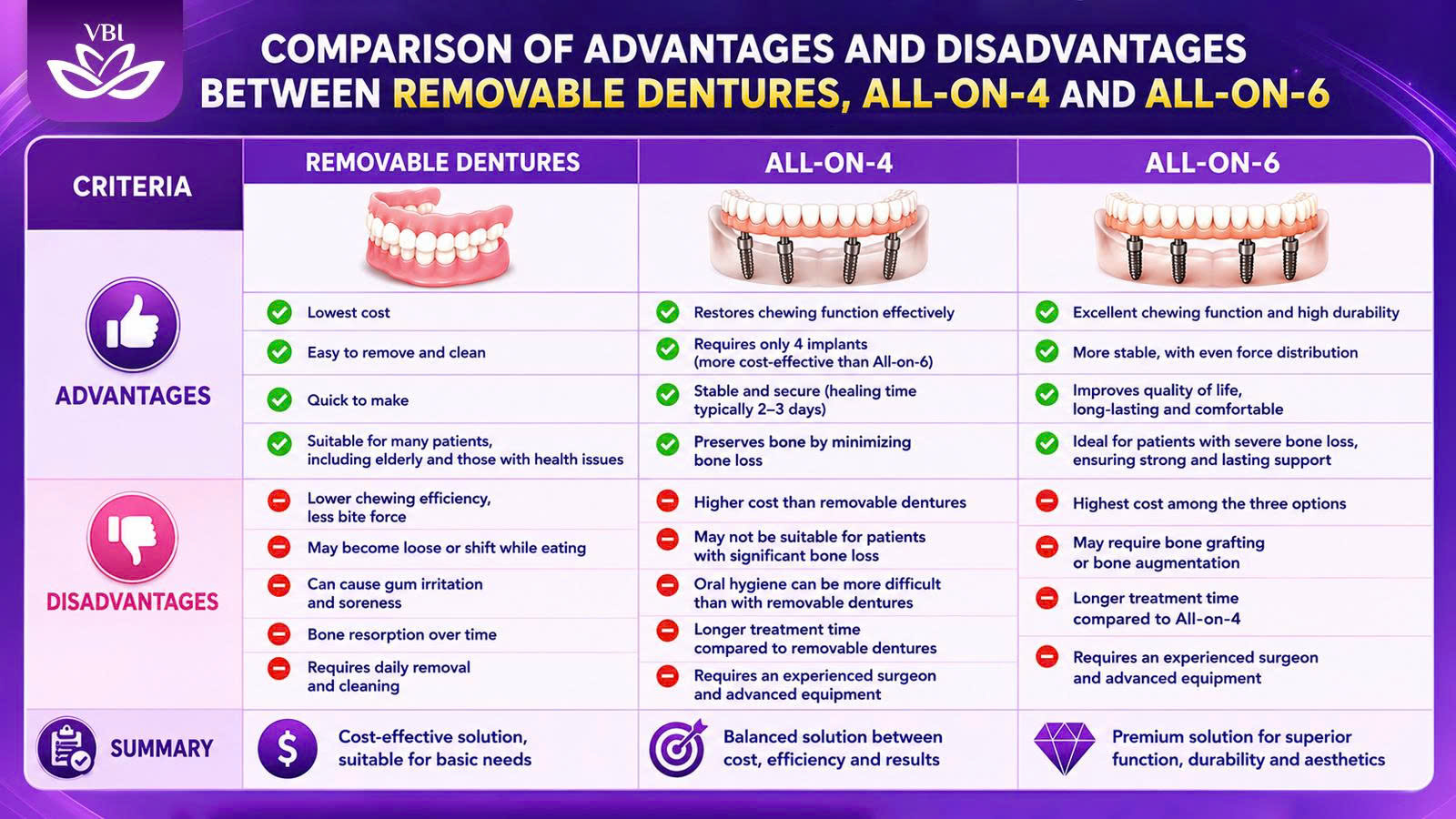
To help you visualize the differences between these clinical approaches, we have prepared a detailed comparative chart below.
The Digital Workflow: Precision Over Guesswork
The era of messy dental putty and blind surgical drilling is over. Today, a full arch rehabilitation is meticulously planned on a computer screen long before you even sit in the surgical chair. At leading international clinics in Hanoi, such as Viet Bi Dental, the entire process is driven by digital data.
-
3D Volumetric Scanning: The first step is a Cone Beam Computed Tomography (CBCT) scan. This machine captures a high-resolution, three-dimensional map of your skull. We can see the exact thickness of your bone, the precise location of your nerves, and the hidden roots of any remaining decayed teeth.
-
Intraoral Optical Mapping: Next, a digital wand scans the inside of your mouth. It takes thousands of pictures per second to create a perfect color 3D model of your gums and bite.
-
Computer-Guided Surgery: Our specialists merge the CBCT x-ray with your optical scan. Using specialized software, they virtually place the implants into the digital bone. They calculate the exact angle and depth to a fraction of a millimeter.
-
The Surgical Guide: This digital plan is sent to a 3D printer, which produces a custom surgical stent. During surgery, this stent fits over your gums. It restricts the surgeon’s drill, ensuring the implant goes exactly where it was planned on the computer. There is no guesswork.
Because of this extreme precision, the surgery is often “flapless”. We do not need to slice open your gums to find the bone. This means drastically less bleeding, virtually zero swelling, and a recovery time measured in days rather than weeks.
To extract broken teeth safely before placing implants, we utilize the Piezotome ultrasonic system. Instead of using aggressive rotary drills that heat up and damage surrounding bone, the Piezotome uses high-frequency sound waves. It gently separates the tooth from the socket without cutting any soft tissue or nerves.
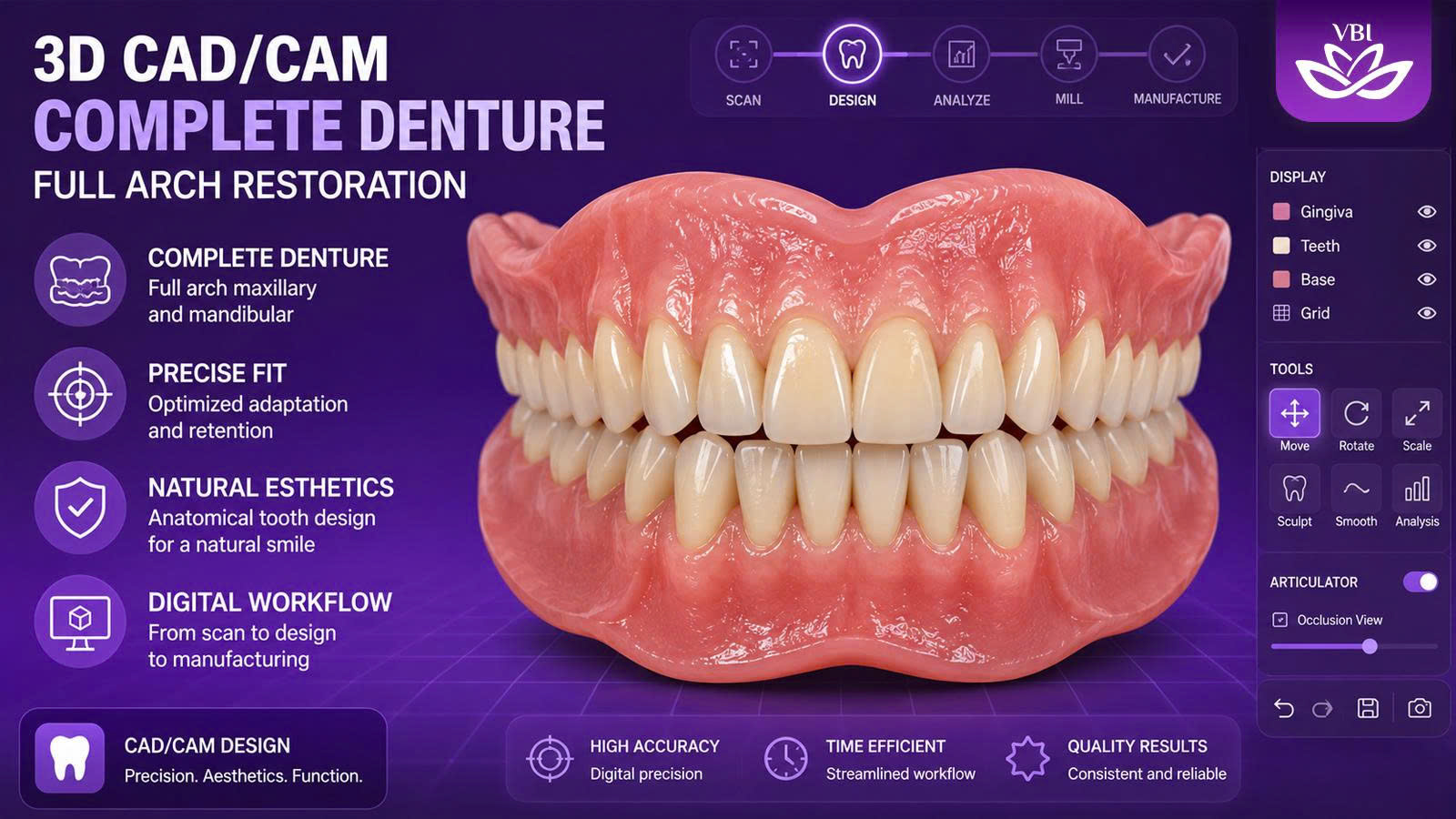
You can see the complexity and precision of this digital planning phase in our laboratory simulation.
Cost Transparency: Australia vs. Vietnam
The primary reason thousands of patients fly to Hanoi every year is the profound economic advantage. In Australia, the system is fundamentally broken for complex dental care. Medicare does not cover implantology. Private health insurance only pays a tiny fraction of the cost, usually maxing out at a few thousand dollars.
A standard All-on-4 treatment for a single jaw in Melbourne or Brisbane easily costs between $20,000 and $30,000 AUD. If you need both your upper and lower jaws restored, you are looking at a devastating $40,000 to $60,000 AUD.
In Vietnam, the exact same procedure, using the exact same premium Swiss or American titanium implants, is radically different.
| Treatment Phase | Average Cost in Australia (AUD) | Cost in Vietnam (AUD) | Total Savings |
| All-on-4 (Single Arch) | $20,000 – $30,000 | $5,000 – $8,000 | 65% – 75% |
| All-on-6 (Single Arch) | $25,000 – $40,000 | $7,000 – $10,000 | 60% – 75% |
| Bone Grafting / Sinus Lift | $1,500 – $3,000 | $300 – $600 | 70% – 80% |
| Premium Zirconia Upgrade | $5,000 – $8,000 | $1,500 – $2,500 | 65% – 70% |
Data accurately sourced from comparative market analysis reports for 2026.
Why is it so much cheaper? It is not about cutting corners on medical safety. It is purely about macroeconomics. The cost of commercial real estate, nursing staff salaries, and laboratory operations in Vietnam are a fraction of what they are in Sydney. Furthermore, favorable exchange rates heavily multiply your purchasing power. We pass these operational savings directly to you.
But beware of the “too good to be true” offers. Many budget clinics advertise impossibly low prices, only to hit you with hidden fees. They charge extra for the temporary teeth, the surgical guide, the pain medication, and the clinic facility fee. At elite institutions, we operate on a doctrine of radical transparency. You receive a legally binding, itemized quote before you ever board the plane.
Material Science: Titanium vs. Zirconia
Your jaw is a highly corrosive, high-stress environment. The materials placed into your bone must be biologically inert and mechanically indestructible.
We exclusively use commercially pure Titanium (Grade 4) or Titanium alloys for the actual implant roots. Titanium has a unique biological property: human bone loves it. Through a process called osseointegration, living bone cells will grow directly into the microscopic pores of the titanium surface, fusing the metal to your skeleton.
However, not all titanium is equal. We use globally recognized brands like Straumann (Switzerland) and Nobel Biocare (USA). These premium implants feature chemically active surfaces (like SLActive) that attract blood proteins instantly. This cuts the healing time in half compared to cheap, unbranded clone implants used by discount clinics.
For the visible teeth—the final bridge that you smile and chew with—you have choices. Standard bridges are made of acrylic molded over a titanium bar. They are excellent shock absorbers but can stain or wear down over a decade.
The ultimate upgrade is Monolithic Zirconia. Zirconia is a highly advanced ceramic. It is milled by a computer from a single, solid block. It is virtually unbreakable, it never stains from coffee or red wine, and it perfectly mimics the translucency of natural human enamel. Most importantly, plaque and bacteria cannot easily stick to zirconia, making it much easier to keep clean and preventing gum inflammation.
The Timeline: What to Expect in Hanoi
A full mouth reconstruction is not an afternoon appointment. It is a profound medical intervention. The standard timeline requires two separate trips to Vietnam, spaced three to six months apart. This delay is not an inconvenience; it is a strict biological necessity.
Trip 1: Surgery and Immediate Loading (7-14 Days)
-
Day 1: You arrive in Hanoi. We provide an airport transfer to your hotel.
-
Day 2: Comprehensive clinical examination. We take the 3D CBCT scans, conduct blood tests to ensure your blood clots normally, and finalize the digital surgical plan.
-
Day 3 or 4: Surgery Day. Under deep local anesthesia, any failing teeth are extracted. The bone is smoothed, and the 4 or 6 implants are precisely placed.
-
Day 5: If your bone is dense enough (primary stability), we perform “Immediate Loading”. A temporary, fixed acrylic bridge is screwed onto the implants. You walk out with a full, beautiful smile.
-
Day 6 to 12: Rest and recovery. You will eat a soft-food diet (like Vietnamese Pho without the meat chunks). We conduct several follow-up checks to ensure the gums are healing perfectly.
-
Day 14: You fly back to Australia.
The Healing Phase (3-6 Months at Home) While you are back in Australia, the osseointegration happens. The jawbone slowly solidifies around the threads of the implants. You must stick to a soft diet during this period. Biting into an apple or a hard steak too early can cause micro-movements, which will snap the delicate new bone cells and cause the implant to fail.
Trip 2: The Final Prosthesis (7 Days)
-
Once the bone is fully integrated, you return to Hanoi.
-
We unscrew the temporary bridge.
-
We take final, ultra-precise digital impressions of your fully healed gums.
-
Our laboratory mills your permanent, final Zirconia bridge.
-
We attach the permanent teeth, adjust your bite to perfection, and you return home permanently.
Strict Sterilization, Safety, and Peri-Implantitis
The biggest fear Australian patients have is cross-contamination in a foreign country. This is a valid fear if you visit a sub-standard facility.
Elite clinics in Vietnam operate at hospital-grade safety levels. We strictly comply with the Association for the Advancement of Medical Instrumentation (AAMI) standards. This means utilizing Class B autoclaves that use vacuum steam to sterilize every microscopic crevice of our surgical tools.
We are also radically honest about surgical risks. The main threat to long-term success is a disease called Peri-implantitis. This occurs when bacteria build up around the implant collar, causing the gums to swell and the bone to dissolve. It is identical to severe gum disease around natural teeth.
Peri-implantitis is almost entirely preventable. The leading causes are poor oral hygiene at home and smoking. Nicotine severely constricts the blood vessels in your gums, strangling the tissues of oxygen and causing the bone to die. If you smoke, your risk of implant failure skyrockets. We provide rigorous post-operative hygiene training to ensure you know exactly how to use a water flosser and specific interdental brushes to keep your new implants pristine.
Logistics, Superannuation, and Global Warranties
Navigating the logistics of medical travel can be overwhelming, but we act as your personal healthcare concierge.
For Australian citizens, the government requires you to apply for an E-visa before arriving. This process is entirely digital and allows a 30-day stay, which is more than enough for either phase of your treatment.
Financially, if you do not have the cash on hand, you may legally access your retirement funds. The Australian Taxation Office (ATO) permits the Compassionate Release of Superannuation (CRS) to pay for medical treatments that alleviate chronic pain or treat a life-threatening illness. Because severe bite collapse prevents you from digesting food properly and causes chronic TMJ pain, full-arch implants often qualify. Our administrative team provides all the exact dental codes, 3D x-rays, and specialist letters required to submit a successful application to the ATO and Ahpra.
Finally, what happens if something goes wrong when you are back in Sydney or Melbourne? We eliminate this fear by issuing an International Implant Passport. This legal document details the exact serial number, brand, and size of every implant in your mouth. Because we use global brands like Nobel Biocare and Straumann, any local dentist in Australia can easily order parts or tighten a loose screw. Furthermore, our implants carry long-term international warranties, protecting your investment for decades to come.
If you are a pensioner worried about age limits, we have dedicated protocols to ensure a safe, painless experience. You can read our detailed guide on best dental implants for seniors to understand how we manage bone density issues in older adults. To learn more about the broader scientific consensus on these treatments, you can also explore peer-reviewed literature on full arch rehabilitation.
Do not let tooth loss dictate your quality of life or drain your life savings. We are here to help you rebuild your smile and your health.
Ready to restore your bite and reclaim your confidence?
Do not guess about your bone density or treatment costs.
👉 Book your free online X-ray review today 👈
Our Specialist Level II surgeons will review your case remotely and provide a transparent, exact clinical plan before you even book a flight.




Bài viết liên quan
Laser Teeth Whitening in Hanoi: Safe, Rapid & Bright Results
Achieve a brilliant, photo-ready smile with our professional teeth whitening hanoi services, completed in just...
Painless Teeth Scaling in Hanoi Old Quarter: Viet Bi Premium Experience
Disclaimer: This content is for informational purposes only and does not constitute professional medical advice....
How Long Do Implants Take? 7 Essential Timeline Facts
Patients frequently ask how long do implants take from the initial surgery to the final...
Dental Implant Materials Comparison: Titanium vs Zirconia
An objective dental implant materials comparison helps you choose the safest root replacement. You face...
Bone Graft for Dental Implants: Why It’s Necessary & Recovery
The deterioration of alveolar bone tissue begins immediately following tooth extraction. This rapid physiological decline...
Teeth Implants for Seniors in Vietnam: Safe & Painless Solutions
Getting teeth implants for seniors requires specialized care and comprehensive bone density assessment. For older...