
 Mon - Sun 8:00 - 19:00
Getting teeth implants for seniors requires specialized care and comprehensive bone density assessment. For older adults suffering from severe tooth loss, loose dentures, or deteriorating jawbones, traditional dentistry often presents painful bone grafting and exorbitant costs. The reality is that advanced age does not disqualify patients from achieving a permanent, fully functional masticatory system. Clinical studies confirm that implant survival rates for senior patients exceed 98.7%, even for those diagnosed with systemic osteoporosis. By choosing Vietnam for dental rehabilitation, international patients gain access to world-class digital workflows, specifically the All-on-4 protocol. This surgical method utilizes tilted titanium roots to completely bypass the need for invasive sinus lifts. Specialists provide the best dental implants for seniors abroad with a focus on painless surgery. Utilizing ultrasonic piezosurgery and 3D navigation, clinical institutions in Hanoi ensure minimal trauma, rapid healing, and a dramatic improvement in digestive health.
The Systemic and Psychological Toll of Edentulism in Aging Populations
The physiological consequences of losing natural teeth extend far beyond aesthetic concerns. The mirror reflects a changed face. Sunken cheeks. An aging profile. But the true damage remains hidden beneath the mucosal tissue. When a patient loses natural tooth roots, the alveolar jawbone stops receiving the essential mechanical stimulation required to maintain its structural density. Without the continuous pressure generated by chewing, osteoclasts—cells responsible for bone resorption—begin to break down the jawbone at an accelerated rate.
This continuous osseous degradation causes profound facial collapse, radically diminishing psychological well-being and social confidence. Furthermore, reliance on traditional removable acrylic dentures introduces severe biomechanical failures. Dentures rest directly on the gums, causing continuous mucosal ulceration, friction, and extreme discomfort. More critically, dentures restore only a fraction of natural bite force, leading to severe masticatory dysfunction. Patients are forced into a restricted diet of soft, highly processed foods, which precipitates malnutrition and subsequent gastrointestinal pathologies. Restoring this function through permanent fixtures is not merely a cosmetic enhancement; it is a critical medical intervention required to preserve the systemic health and nutritional intake of the geriatric demographic.
Navigating Bone Density Challenges in Older Adults
Osteoporosis and reduced bone mineral density are the primary concerns when evaluating the viability of dental restoration in geriatric patients. Many local practitioners hesitate to treat aging individuals, citing a lack of sufficient bone volume to support traditional titanium fixtures. However, systemic osteoporosis is not a contraindication for endosseous implant therapy. Modern clinical evaluations demonstrate that the overall survival rate of implants in osteoporotic patients remains above 90%, with specific studies recording a 98.7% success rate over long-term follow-ups. The core scientific principle relies on understanding the distinct phases of mechanical stability and biological osseointegration. While older adults begin with lower initial stability scores, the physiological capacity for the bone to remodel and fuse perfectly with the implant surface remains fundamentally intact. Careful screening utilizing dual-energy X-ray technology ensures accurate mapping of the jaw structure prior to any surgical intervention.
Visualizing the difference in microscopic bone architecture is the absolute first step in planning a safe and predictable surgical outcome for older patients.
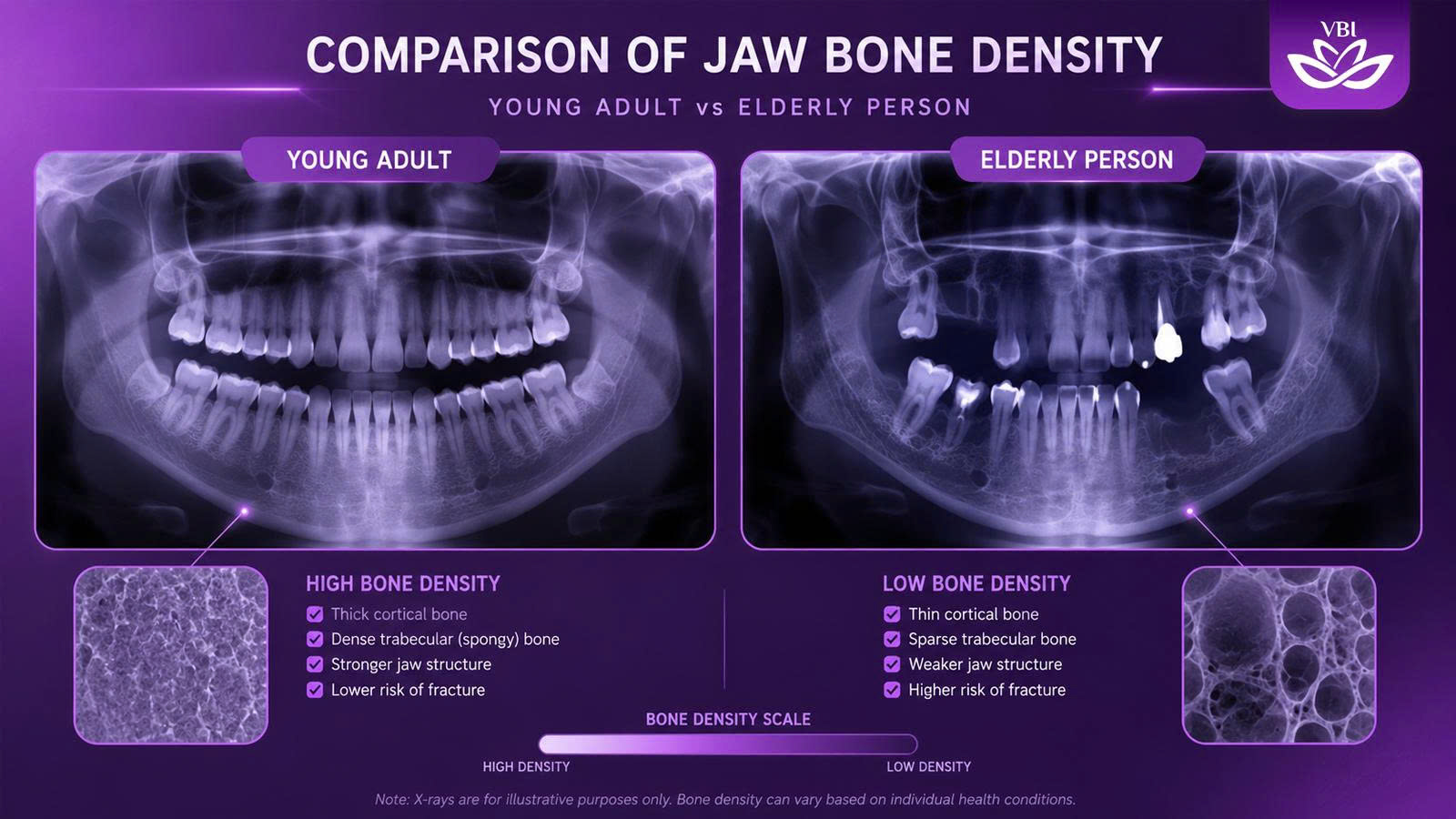
Understanding these bone density challenges is vital for establishing realistic clinical expectations. Osteoporosis is characterized by a systemic reduction in bone mineral density (BMD) and the progressive deterioration of trabecular bone microarchitecture. This condition is typically quantified using a femoral neck score established by the World Health Organization. Historically, this reduced bone mass was viewed with intense clinical skepticism.
However, deep longitudinal analyses reveal a different reality. The critical metric of success is evaluated through marginal bone loss (MBL) and global bone loss (GBL). Empirical evidence proves that skeletal bone mineral density is not statistically correlated with increased marginal bone loss around the cervical collar of the titanium fixture. Most clinical evaluations indicate zero statistically significant divergence in bone-to-implant contact (BIC) or cytokine inflammatory profiles between osteoporotic subjects and healthy control groups.
To comprehend why these restorations succeed, one must separate primary stability from secondary stability. Primary stability is the immediate physical friction achieved between the titanium threads and the surgical site. Osteoporosis directly impairs this initial phase. Resonance frequency analysis (Osstell ISQ) confirms that osteoporotic sites yield lower initial stability. However, secondary stability is a dynamic biological process where living bone tissue physically fuses to the titanium surface. Clinical data demonstrates that while osteoporotic patients initiate healing with lower primary stability (mean ISQ of 67.04 at six months), the biological process compensates over time, reaching a highly stable ISQ of 68.93 at twelve months.
| Clinical Metric | Osteoporotic Cohort | Healthy Control Cohort |
| Overall Survival Rate | 98.7% (to >90%) | >95% |
| ISQ Score (6 Months) | 67.04 | Standard Baseline |
| ISQ Score (12 Months) | 68.93 | Standard Baseline |
| Marginal Bone Loss | -0.34 mm (minor) | Negligible difference |
Age vs. Disease: Managing Diabetes and Senescence
While reduced bone density alone does not dictate surgical failure, the compounding variables of biological aging require strict medical management. A critical contradiction exists within the broader clinical data. While osteoporosis yields a 98.7% survival rate , specific cohort studies focusing on older adults aged 66 to 80 years have recorded alarming early failure rates of 14.56% and severe infection rates reaching 22.78%.
This stark divergence highlights that elevated failure rates in advanced age groups are not driven by osteoporosis, but rather by biological senescence and uncontrolled metabolic comorbidities. Aging precipitates a decline in immune response, reduced vascularization of the maxilla, and a diminished capacity to combat localized bacterial infiltration. Metabolic disorders, most prominently diabetes mellitus, present profound challenges to the healing cascade. Hyperglycemic environments trigger chronic systemic inflammation, severely compromise the innate immune response, and drastically impair microvascular circulation. In the context of oral surgery, uncontrolled diabetes exponentially increases the susceptibility to peri-implantitis and catastrophic early implant failure.
Despite these formidable biological hurdles, diabetes does not preclude successful rehabilitation if strict glycemic parameters are enforced. Extensive clinical evaluations establish a definitive therapeutic threshold: when diabetes is well-managed, specifically characterized by a glycated hemoglobin (HbA1c) level of less than 8%, survival rates are not significantly compromised compared to normoglycemic populations. This data dictates that rigorous preoperative hematological screening is absolute. Establishing strict HbA1c thresholds neutralizes the risk of high infection rates observed in generalized senior cohorts, transforming a volatile surgical environment into a predictable clinical outcome.
Pharmacological Considerations: The Risk of Bisphosphonates
The pharmacological management of systemic conditions introduces specific iatrogenic risks that require meticulous oversight. Patients undergoing antiresorptive therapies, specifically the administration of intravenous or oral bisphosphonates for osteoporosis, face a heightened risk of developing medication-related osteonecrosis of the jaw (MRONJ).
Bisphosphonates function by permanently inhibiting osteoclast activity, effectively freezing the bone remodeling cycle to prevent systemic fractures. While highly beneficial for the spine and hips, this mechanism catastrophically impairs the jawbone’s ability to heal following surgical trauma. Therefore, interdisciplinary medical management, including exhaustive pharmacological history taking and potential drug holidays coordinated with a primary care physician, is an absolute prerequisite to mitigate the incidence of ischemic bone necrosis.
The All-on-4 Protocol: Bypassing Painful Bone Grafts
For patients presenting with severe edentulism and advanced bone resorption, the traditional protocol of extensive autogenous block grafting or bilateral sinus floor elevation is fraught with high morbidity, prolonged healing times, and intense post-operative pain. The definitive clinical solution is the implementation of the All-on-4 or All-on-6 protocol. This advanced technique utilizes three-dimensional Cone Beam Computed Tomography (CBCT) to map the residual basal bone. By tilting the posterior implants at a precise 30 to 45-degree angle, surgeons bypass the maxillary sinus cavities and the mandibular nerve canal entirely, anchoring the titanium fixtures deep into the dense, anterior bone.
This geometric redirection eliminates the need for traumatic bone grafting, slashes the surgical timeline, and allows for immediate biomechanical loading. Known as “Teeth-in-a-Day,” this protocol provides the patient with a fixed, functional provisional prosthesis within 24 hours of surgery. By minimizing surgical intervention, this method represents the safest class of implants for older adults, drastically reducing surgical fatigue and the physiological stress placed upon the aging cardiovascular system. Exploring the specifics of all-on-4 dental implants in hanoi reveals how international clinics execute this protocol with flawless precision.
Painless Technology: Digital Workflows and Piezosurgery
Fear of pain and prolonged recovery is the most common psychological barrier preventing elderly patients from seeking necessary surgical care. Traditional implant placement often involves aggressive tissue reflection and the use of high-speed rotary drills that generate significant heat and trauma. Modern international implantology rejects this outdated approach entirely. Highly specialized clinics rely on ultrasonic piezosurgery, an advanced system utilizing micro-vibrations to sculpt the bone while leaving surrounding nerves, blood vessels, and soft mucosal tissues completely untouched. This drastically minimizes post-operative swelling, eliminates severe bruising, and ensures a rapid return to normal function. Furthermore, the integration of 3D X-Guide dynamic navigation allows the surgeon to visualize the exact position of the titanium root in real-time on a digital monitor. This pinpoint accuracy ensures the procedure is virtually painless, exceptionally fast, and drastically reduces the need for heavy prescription painkillers during the recovery phase.
Witnessing this digital precision in action highlights exactly why modern surgical techniques are exceptionally gentle on the aging cardiovascular system.
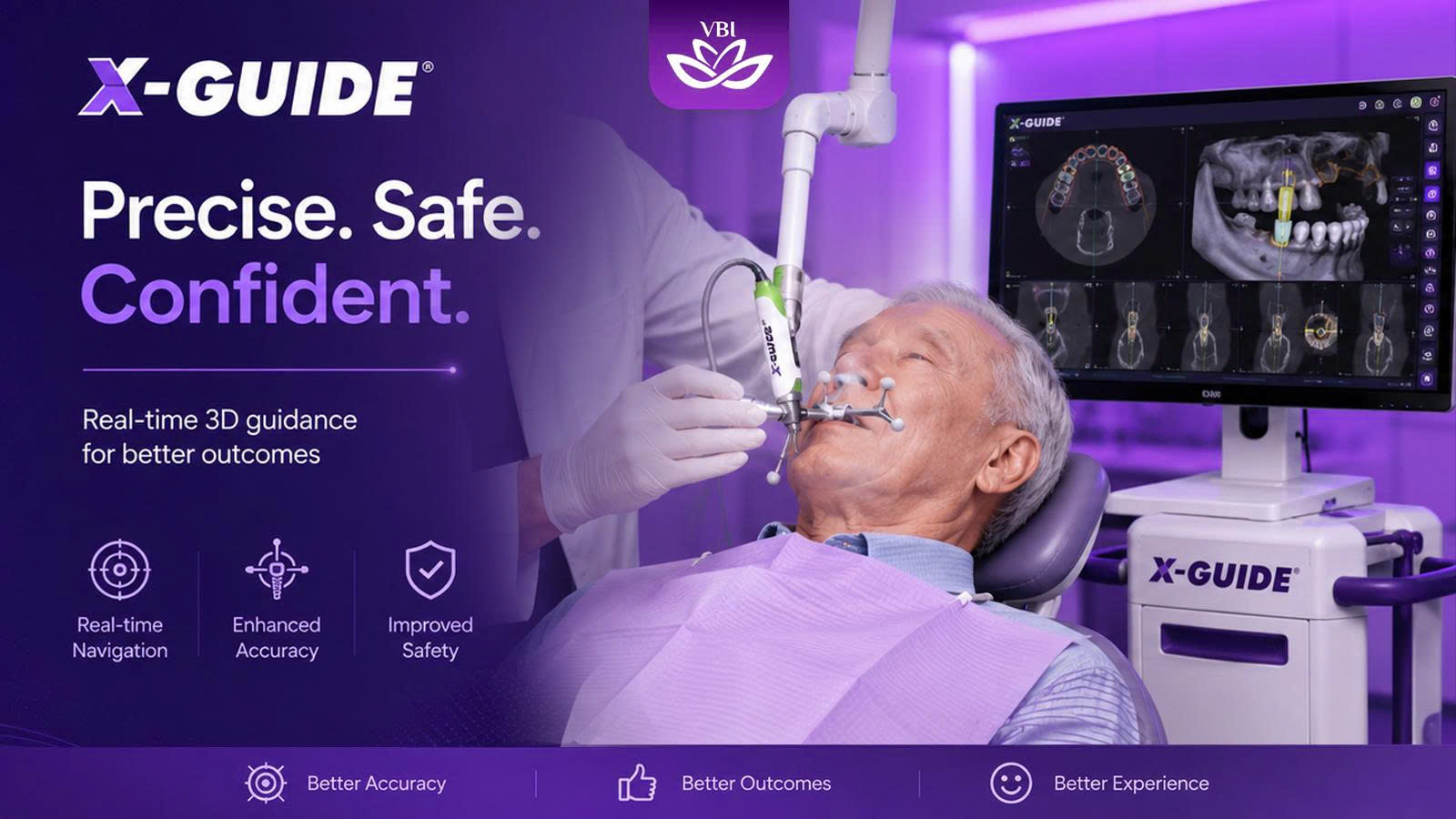
Ultrasonic cutting technology operates at a specific frequency (27-36 kHz) that selectively targets mineralized tissue. When the instrument tip encounters soft tissue, such as the delicate Schneiderian membrane located in the sinus cavity or the inferior alveolar nerve, it simply stops cutting. This selective tissue preservation is a monumental advancement for geriatric dentistry, where soft tissue healing is naturally delayed. Coupled with advanced local anesthesia protocols utilizing premium imported anesthetics (such as Articaine combined with precise epinephrine ratios), the intraoperative experience is characterized by mild mechanical pressure rather than acute pain.
Material Science: Super-Hydrophilic Surfaces and Zirconia
The choice of biomaterial plays a defining role in accelerating secondary stability, especially in older patients with sluggish bone remodeling capabilities. Premium implant systems manufactured from Grade 4 or Grade 5 commercially pure Titanium are subjected to specialized surface modifications. The SLA Active (Sandblasted, Large-grit, Acid-etched) surface represents the pinnacle of biomaterial engineering.
This super-hydrophilic surface actively draws blood plasma and osteoprogenitor cells directly into the microscopic titanium threads immediately upon surgical insertion. This immediate fluid attraction triggers a rapid coagulation cascade that essentially halves the standard osseointegration timeline, a crucial benefit for patients with compromised bone density.
Furthermore, the final prosthetic restorations in the aesthetic zone leverage monolithic Zirconia. Zirconia offers unparalleled biocompatibility, actively resisting bacterial plaque accumulation at the gingival margin. By preventing plaque adhesion, Zirconia drastically reduces the long-term risk of peri-implantitis (bacterial bone loss) while providing superior light transmission for flawless, natural optical aesthetics.
The Financial Reality: Australia vs. Vietnam
The utilization of Southeast Asian medical infrastructure is driven by profound systemic deficiencies within domestic healthcare frameworks. In Australia, the national healthcare system, Medicare, systematically excludes advanced restorative dental procedures. Consequently, complex surgical interventions are entirely privatized, subjecting patients to unregulated, free-market pricing models.
The financial burden is staggering. A single localized implant in metropolitan centers such as Sydney or Melbourne incurs costs ranging from 3,000 to 7,000 AUD. Comprehensive full-arch rehabilitations utilizing All-on-4 protocols demand an exorbitant outlay of 20,000 to 60,000 AUD. The convergence of these hyper-inflated medical costs with a sustained cost-of-living crisis spanning 2025 and 2026 has precipitated a state of extreme financial distress for approximately 80% of the Australian populace facing major dental interventions. Patients are routinely forced into delaying treatment, enduring chronic pain, or liquidating retirement portfolios.
In direct contrast, the Vietnamese medical tourism sector offers a structurally transparent and highly accessible pricing model. Clinical centers in Hanoi deliver single implant restorations at a price point of 900 to 1,500 AUD, and comprehensive All-on-4 full-arch rehabilitations for 5,000 to 10,000 AUD. This represents a net cost reduction of 60% to 80% for the patient.
| Dental Procedure | Australian Domestic Market (AUD) | Vietnamese Market (AUD) | Estimated Savings (%) |
| Single Dental Implant | $3,000 – $7,000 | $900 – $1,500 | 70% – 78% |
| Full-Arch (All-on-4) | $20,000 – $60,000 | $5,000 – $10,000 | 75% – 83% |
| Bone Grafting / Sinus Lift | $1,500 – $3,500 | $300 – $800 | ~78% |
This massive financial margin remains highly favorable even after incorporating the logistical expenses of international airfare, premium hotel accommodation in Hanoi’s Old Quarter, and post-operative leisure activities. Furthermore, Vietnamese clinics strictly adhere to a “No Hidden Fees” policy, providing itemized quotes that break down the cost of the titanium fixture, the abutment, the ceramic crown, and the 3D CT scanning fees upfront.
For patients requiring financial assistance, navigating the Australian Taxation Office (ATO) regulations governing the early, compassionate release of superannuation is a viable pathway. Under strict ATO guidelines, funds can be released to treat acute or chronic pain associated with severe dental pathology, provided the treatment is deemed medically necessary rather than purely cosmetic.
Ensuring Absolute Safety: AAMI Sterilization Standards
While the economic arbitrage is undeniable, psychological friction remains a significant barrier. Patients harbor deep-seated apprehensions regarding cross-contamination, the utilization of unregulated biomaterials, and international hygiene standards. The Australian Dental Association (ADA) consistently amplifies these anxieties by issuing advisories concerning overseas clinics.
To completely neutralize these risks, elite clinical institutions in Vietnam operate under draconian infection control protocols. These facilities strictly enforce the sterilization standards outlined by the Association for the Advancement of Medical Instrumentation (AAMI) and the Centers for Disease Control and Prevention (CDC).
The sterilization workflow is an uncompromising, multi-tiered process. Following any surgical procedure, instruments are subjected to enzymatic ultrasonic baths to dissolve microscopic biological debris. They are then individually sealed in specialized sterilization pouches equipped with chemical indicator strips. The final phase utilizes Class B vacuum autoclaves, which deploy high-pressure saturated steam to obliterate all highly resistant bacterial spores and viral pathogens. The surgical theater itself undergoes rigorous environmental decontamination, utilizing localized HEPA filtration systems and anti-microbial surface treatments to ensure a surgical environment equivalent to a traditional hospital operating room.
Logistics and Recovery: The Patient Journey in Hanoi
The expansion of direct aviation routes facilitated by carriers such as VietJet, Scoot, and Jetstar has effectively neutralized historical logistical barriers, creating a frictionless geographical corridor between major Australian urban centers and Hanoi. Planning a medical journey requires careful coordination, but modern clinical concierge services manage every variable.
The patient journey begins with an online consultation, where digital X-rays and medical histories are reviewed by specialists to determine clinical viability. Once approved, patients apply for a standard 30-day E-visa through the official Vietnamese immigration portal. Patients are strongly advised to secure comprehensive travel insurance that includes coverage for cross-border medical complications.
Upon arrival at Noi Bai International Airport, patients are greeted by dedicated concierge staff and transported directly to premium accommodations situated near the clinic, often in the culturally rich, highly walkable Hanoi Old Quarter. The surgical phase is typically completed within the first three days of the itinerary.
Post-operative recovery in Hanoi is exceptionally comfortable. Because the All-on-4 protocol and piezosurgery are minimally invasive, patients rarely experience severe downtime. The rich local culinary landscape provides an ideal post-surgical diet. Nutrient-dense, highly digestible local cuisine—such as traditional Pho (rice noodle soup with slow-cooked bone broth) and Chao (savory rice porridge)—allows patients to maintain optimal caloric intake without placing any mechanical stress on the newly placed implants.
After a final clinical evaluation to ensure proper initial healing and the secure fit of the provisional prosthesis, patients are cleared to return to Australia. To address long-term post-operative anxieties, patients are provided with a legally binding “Implant Passport.” This document traces the exact serial numbers of the globally recognized Straumann or Nobel Biocare components utilized, ensuring that any local dentist in Australia can identify and service the implants under international warranty protocols. Dedicated telehealth channels remain open, providing continuous monitoring and absolute peace of mind across international borders.
Advanced age and systemic conditions like osteoporosis are no longer barriers to a restored, highly functional smile. Through precise digital diagnostics, minimally invasive techniques, and an uncompromising commitment to clinical safety, geriatric implantology in Vietnam offers a life-changing, financially accessible medical solution.




Bài viết liên quan
How Long Do Implants Take? 7 Essential Timeline Facts
Patients frequently ask how long do implants take from the initial surgery to the final...
Dental Implant Materials Comparison: Titanium vs Zirconia
An objective dental implant materials comparison helps you choose the safest root replacement. You face...
Bone Graft for Dental Implants: Why It’s Necessary & Recovery
The deterioration of alveolar bone tissue begins immediately following tooth extraction. This rapid physiological decline...
Full Mouth Restoration in Vietnam: Options, Costs & Timeline
A complete full mouth restoration vietnam package includes advanced digital planning and premium materials to...
All-on-4 vs All-on-6 Dental Implants: Which is Right for You?
When deciding between all on 4 vs 6 implants, the core difference lies in biomechanical...
International Dental Implant Warranty: Post-Surgery Care for Australian Patients
Yes, premium dental implants placed in Vietnam come with a robust dental implant warranty that...