
 Mon - Sun 8:00 - 19:00
An objective dental implant materials comparison helps you choose the safest root replacement. You face a critical, life-altering decision between two dominant surgical fixtures: titanium and zirconia. Titanium remains the absolute gold standard for complex, full-mouth reconstructive dentistry. It offers exceptional metallic ductility, profound fracture toughness, and over five decades of proven clinical success worldwide. Zirconia represents a revolutionary, metal-free ceramic alternative. It excels dramatically in the anterior aesthetic zone by perfectly mimicking natural tooth dentin coloration and significantly reducing harmful bacterial plaque adhesion. Both premium materials consistently achieve excellent osseointegration with your jawbone. But they behave fundamentally differently under intense, daily chewing forces. Titanium flexes. Zirconia resists. Your specific jaw bone density, gingival tissue thickness, and unconscious biting habits ultimately dictate the optimal choice. When evaluating titanium vs zirconia implants you must consider both mechanical strength and gum esthetics. Understanding these microscopic material differences prevents catastrophic mechanical failures and ensures lifelong peri-implant health. We provide the precise scientific clarity you need to navigate this complex medical decision safely.
Titanium dental implants achieve an extraordinary long-term survival rate exceeding 95% over a twenty-year tracking period, according to extensive clinical data published in the Journal of Clinical Periodontology. Zirconia ceramic implants demonstrate a highly promising five-year clinical survival rate ranging from 92% to 97%, based on a comprehensive 2023 meta-analysis by Balmer et al. featured in Clinical Oral Implants Research. Furthermore, transitioning from standard provisional restorations to highly polished monolithic zirconia superstructures reduces the total bacterial plaque adhesion area by exactly 77%, as systematically reported by the Dental Materials Journal.
Material Science: The Foundational Architectures
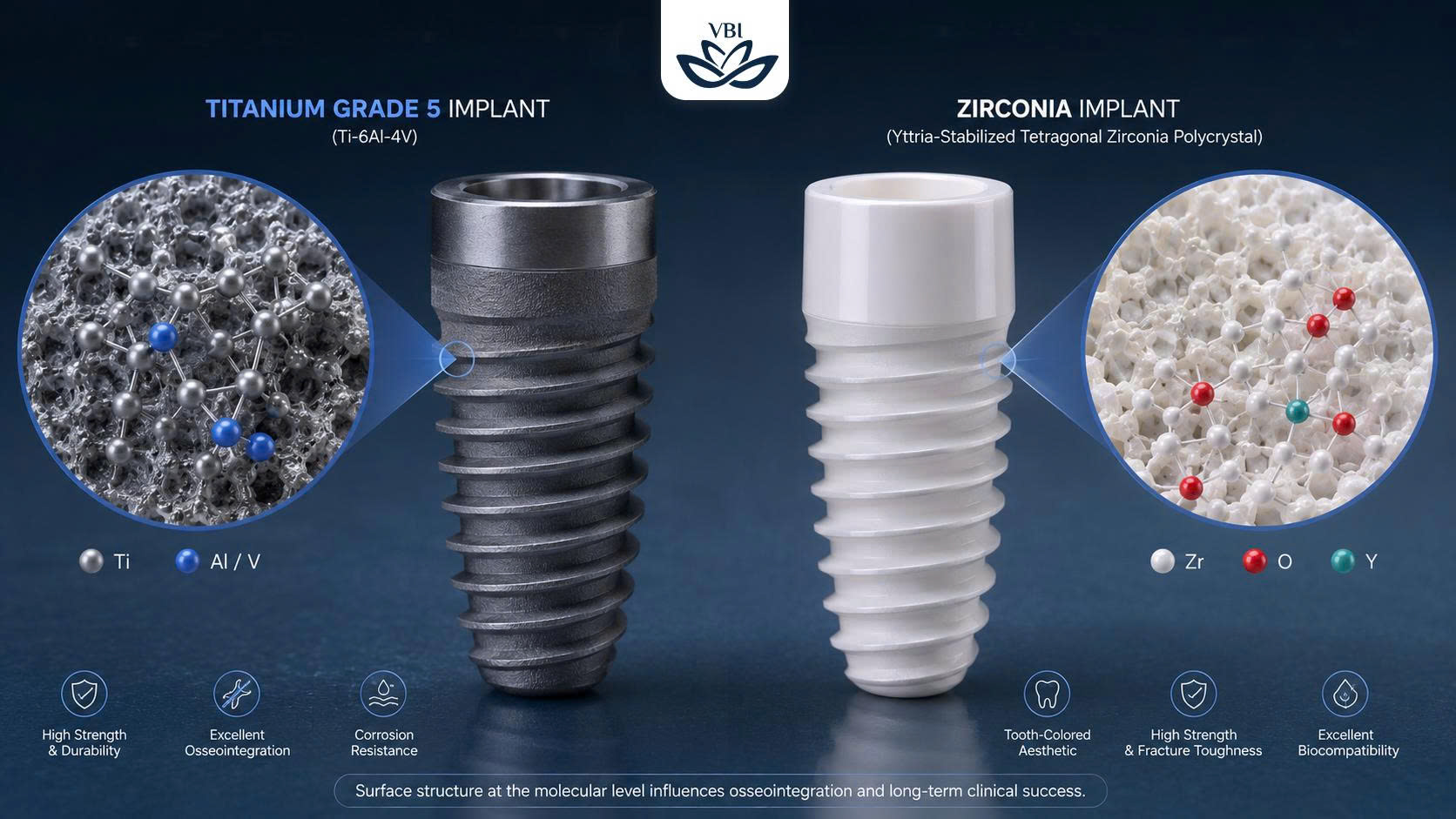
The foundational difference between these two premium restorative materials lies entirely in their microscopic atomic structures. Titanium is a highly ductile metal alloy that relies entirely on a passive surface oxide layer for successful biological integration. Conversely, zirconia is a remarkably rigid, yttria-stabilized crystalline ceramic explicitly designed to resist chemical degradation in the mouth. These contrasting physical architectures directly dictate how each artificial root interacts with your living jawbone and withstands daily occlusal forces over decades.
To truly understand how an artificial tooth root will behave in your jaw, our experts must first examine the microscopic lattice structures that define these materials. The biological success of any surgical implant is entirely dependent on its metallurgical or ceramic foundation.
Titanium used in modern implant dentistry is predominantly categorized into two highly refined metallurgical forms: commercially pure titanium (Grade 4) and specialized titanium alloys, most notably Ti-6Al-4V (Grade 5). Grade 4 titanium is characterized by an internal hexagonal close-packed crystalline structure and consists of over 99% pure elemental titanium. This extreme purity affords exceptional physiological corrosion resistance and unmatched systemic biocompatibility. However, Grade 5 titanium is an alpha-beta alloy containing 6% aluminum and 4% vanadium. And this structural alteration changes everything. The deliberate inclusion of these stabilizing metallic elements significantly alters the mechanical profile of the base metal. It results in a sophisticated alloy that is substantially harder and possesses much higher tensile strength than its commercially pure counterpart. Both surgical grades maintain a core titanium composition exceeding 85%. This specific concentration is absolutely critical. It allows for the spontaneous formation of a highly stable, passive titanium dioxide (TiO2) layer on the implant’s surface the microsecond it is exposed to ambient oxygen or human physiological fluids. This inherently formed oxide shield, measuring only nanometers in thickness, acts as the primary biological mediator of osseointegration. It effectively shields the bulk internal metal from corrosive salivary degradation while simultaneously providing a highly reactive, welcoming surface for osteoblast cellular attachment and dense bone matrix deposition.
Conversely, the material science behind ceramic implants operates on a completely different paradigm. Zirconia (zirconium dioxide, ZrO2) is a complex polymorphic ceramic material. It exists in three distinct crystallographic phases depending on the ambient environmental temperature: monoclinic, tetragonal, and cubic. During the manufacturing cooling process, the transition from the high-temperature tetragonal phase to the room-temperature monoclinic phase is naturally accompanied by a dangerous volumetric expansion of approximately 4% to 5%. If this internal expansion occurs in an uncontrolled manner within a dental implant, it leads to massive internal shear stresses. This inevitably causes the catastrophic, spontaneous shattering of the ceramic body. To harness zirconia safely for biomedical surgical applications, structural engineers utilize precise stabilizing oxides. They predominantly use yttrium oxide (Y2O3), along with trace amounts of magnesia and limestone, to forcefully maintain the unstable tetragonal crystalline phase at normal human body temperature. The resulting hyper-engineered material is known as Yttria-Stabilized Tetragonal Zirconia Polycrystal (Y-TZP). Y-TZP possesses a truly fascinating, self-healing biomechanical property known as transformation toughening. When a microscopic crack begins to propagate through the ceramic matrix under heavy occlusal stress, the localized mechanical energy instantly triggers the tetragonal crystals at the exact leading edge of the crack to revert to the monoclinic phase. This localized microscopic volumetric expansion physically compresses the propagating crack. It effectively arrests the defect’s advancement, thereby preventing bulk material failure. This sophisticated crystallographic defense mechanism grants Y-TZP zirconia the highest flexural strength and fracture toughness among all conventional dental ceramics.
Visualizing these intricate atomic structures provides immediate clarity on their distinct biomechanical behaviors during oral function.
Mechanical Strength and Fracture Resistance
Mechanical durability fundamentally defines the functional lifespan of your artificial root. Titanium possesses immense tensile strength and unique flexibility, allowing it to bend slightly under extreme bite forces without snapping. Zirconia boasts superior hardness and compressive strength but suffers from inherent brittleness. Under sudden, severe lateral impacts, rigid ceramic fixtures are far more likely to experience catastrophic microcrack propagation than their highly ductile metallic counterparts.
The human oral cavity is an extraordinarily violent biomechanical environment. Dental implants must reliably withstand repetitive, multidirectional cyclic loading. These forces routinely range from 100 to over 800 Newtons during normal mastication, and can spike significantly higher during parafunctional activities like nocturnal bruxism (teeth grinding). The stark mechanical disparities between ductile metals and brittle ceramics heavily dictate our surgical treatment planning decisions.
A comprehensive dental implant materials comparison reveals that titanium implants exhibit a tensile strength ranging from 550 to 900 MPa, heavily dependent on whether the Grade 4 or Grade 5 alloy is surgically utilized. While zirconia possesses a phenomenally high compressive strength—often ranging from 900 to an astonishing 1,200 MPa—its behavior under tensile or bending forces is fundamentally inferior to titanium. The critical, defining differentiator here is ductility versus brittleness. Titanium is a highly ductile metal. It possesses a high fracture toughness that inherently allows the material to yield, bend, or deform slightly under extreme, sudden loads without experiencing catastrophic, unrecoverable fracture. This unique capacity to flex and safely absorb blunt impact forces ensures an enormous physiological safety margin. This is particularly crucial in the posterior regions of the mandible and maxilla (the molar zones), where human bite forces reach their absolute peak.
Zirconia, on the other hand, is a rigidly stiff, brittle ceramic. While it is highly resistant to surface scratching and abrasive wear due to its superior surface hardness, it completely lacks the metallurgical ability to undergo plastic deformation. Under extreme lateral forces, excessive angled loading, or a sudden traumatic impact, zirconia simply cannot flex to absorb the kinetic energy. Instead, the mechanical stresses rapidly accumulate within the crystalline lattice. Once these stresses exceed the material’s critical structural threshold, rapid microcrack propagation occurs, resulting in sudden, complete, and catastrophic fracture. While the aforementioned transformation toughening mitigates this risk to a certain extent, zirconia remains inherently more susceptible to mechanical failure under non-axial loads than titanium.
Clinical data strongly supports these mechanical realities. Over a standard 10-year observational period, the incidence of titanium implant body fracture is exceptionally rare, documented clinically at less than 0.5%. The ductility of the metal allows it to withstand severe non-axial forces safely day after day. Conversely, a comprehensive 2021 study by Hashim et al., published in the International Journal of Implant Dentistry, reported that the fracture rate for zirconia implants ranges from 1% to 4% over just a brief 5-year period. This significantly higher incidence of catastrophic mechanical failure is a direct, unavoidable consequence of the ceramic’s brittleness.
Furthermore, we must address the concept of Young’s modulus, which represents a material’s inherent stiffness. Human cortical bone exhibits a relatively low modulus of elasticity, allowing your jaw to flex naturally under mechanical stress. Conventional titanium alloys exhibit a much higher elastic modulus, which creates a very unyielding interface within the jawbone. This mismatch can lead to a physiological phenomenon known as stress shielding, wherein the rigid metal implant absorbs the entirety of the masticatory load. This deprives the surrounding crestal bone of the mechanical stimulation strictly necessary for osteoblast cellular activation, occasionally leading to localized bone resorption. Zirconia is even stiffer and harder than standard titanium alloys. Therefore, it presents similar, if not strictly greater, biomechanical challenges regarding healthy load distribution in patients with compromised bone densities.
Biological Integration and Bone Healing
Both materials successfully fuse with human bone through a profound biological process called osseointegration. Titanium forms a highly reactive dioxide layer that instantly attracts blood proteins and bone-building osteoblasts. Zirconia utilizes a completely inert, non-metallic surface to encourage direct cellular attachment. Scientific evidence confirms that both options yield statistically identical rates of bone-to-implant contact during the critical initial surgical healing phase.
The absolute definition of clinical success in modern implantology relies heavily on the establishment and long-term maintenance of rigid, unyielding fixation within the alveolar bone. Osseointegration is defined histologically by our experts as the direct structural and functional connection between ordered, living human bone and the load-bearing surface of an implant, entirely without intervening fibrous scar tissue.
Titanium achieves this miraculous osseointegration via the rapid adsorption of host proteins onto its stable TiO2 surface layer. This nanometer-thick oxide shield subsequently mediates the biological attachment, rapid proliferation, and precise differentiation of osteogenic cells. The surface topography of the implant is heavily modified by manufacturers—often through aggressive sandblasting and acid-etching protocols—to facilitate extreme mechanical interlocking with the maturing bone matrix.
Zirconia, despite lacking any metallic oxide layer, interacts with the surgical environment through a slightly different but equally effective biochemical mechanism. The highly inert ceramic surface encourages direct bone growth and mechanical bonding without releasing trace ions. Histomorphometric studies utilizing both animal models and human retrieval specimens repeatedly confirm that modern zirconia implants achieve an osteointegration index and a Bone-to-Implant Contact (BIC) percentage that is statistically comparable to premium surface-treated titanium. Controlled clinical studies tracking patients up to 5 years show absolutely no significant deficit in the primary surgical stability or secondary biological stability of zirconia fixtures compared to the established metallic standard.
However, the oral cavity is a harsh, unforgiving biochemical environment. It is characterized by aggressively fluctuating pH levels, wildly varying temperatures, and the constant presence of enzymatic and bacterial metabolic byproducts. Titanium exhibits outstanding overall physiological corrosion resistance. But it is not entirely immune to microscopic degradation. Continuous daily exposure to highly acidic diets, potent prophylactic fluoride treatments, or galvanic electrochemical interactions with dissimilar metals in the mouth (such as old gold crowns or silver amalgam fillings) can slowly strip the protective passive TiO2 layer. This specific phenomenon, scientifically known as tribocorrosion, can lead to the slow, microscopic release of titanium particles into the surrounding peri-implant mucosal tissues. This trace ionic release has been linked in some histological studies to localized inflammatory immunological responses.
Zirconia possesses a distinct, undeniable advantage in this specific biological domain. As a fully oxidized, non-metallic ceramic, it is completely chemically inert. Zirconia does not conduct electricity. It is utterly impervious to electrochemical corrosion or acidic degradation in the oral environment. This total lack of ionic release ensures exceptional long-term chemical stability and completely eliminates any patient concerns regarding galvanic currents or systemic metallic toxicity.
Furthermore, we must consider the reality of titanium hypersensitivity. While pure titanium is highly biocompatible, true immunological hypersensitivity to the metal is a documented clinical entity. Epidemiological studies estimate the prevalence of titanium allergy in the general global population to be approximately 0.6%. Patients unfortunately afflicted with this specific delayed hypersensitivity may experience unexplainable implant failure, chronic peri-implant mucosal inflammation, or systemic dermatological reactions. For patients with a documented history of severe metallic allergies, zirconia serves as the absolute, non-negotiable material of choice. There are zero recorded instances of allergic sensitization to biomedical zirconia ceramics in human history.
Soft Tissue Adhesion and Microbiological Defense
Your gums serve as the primary defensive seal against invasive oral pathogens. Zirconia significantly outperforms titanium in repelling harmful bacterial biofilm due to its incredibly smooth, low-energy ceramic surface. This inherent hygienic advantage drastically lowers your risk of developing peri-implant mucositis. However, advanced plasma surface treatments on titanium abutments also successfully promote rapid epithelial cell adhesion to establish a robust mucosal barrier.
The long-term survival of a dental implant relies heavily on the biological stability of the transmucosal seal. The peri-implant mucosa (your gum tissue) must quickly establish a tight, impenetrable biological barrier to prevent the apical migration of destructive periodontal pathogens into the vulnerable underlying crestal bone. Histological evaluations of peri-implant soft tissue reactions reveal that both titanium and zirconia support excellent epithelial cellular adherence. The formation of this vital biological barrier is mediated by complex cellular structures known as hemidesmosomes and the basal lamina.
Zirconia’s incredibly high biocompatibility and remarkably low surface free energy have been proven to promote highly favorable soft tissue integration. This often results in a thicker, visibly healthier, and more resilient mucosal collar compared to standard machined titanium surfaces. The most critical advantage of zirconia, however, lies in its resistance to bacteria. The accumulation of bacterial biofilm on implant abutments is the primary etiologic factor in the pathogenesis of peri-implantitis—a destructive disease that literally eats away the bone holding the implant.
Zirconia exhibits a profound, undeniable superiority over titanium regarding antimicrobial properties. The highly polished surface of a ceramic implant possesses unique electrostatic properties that make it exceptionally difficult for primary bacterial colonizers to physically adhere to the root. In a rigorous clinical study analyzing full-arch restorative cases, researchers definitively proved that transitioning to a monolithic zirconia superstructure reduces total plaque adhesion area by an astonishing 77%. You can review the exhaustive zirconia biological compatibility study for deep clinical insights into this phenomenon. This diminished affinity for biofilm formation positions zirconia as an exceptionally hygienic restorative material.
To combat this, titanium manufacturers are developing advanced surface modification techniques. Recent research involving the application of a Nonthermal Atmospheric Plasma Brush (NTAPB) on titanium abutments has demonstrated remarkable biological results. The plasma treatment drastically increases surface oxygen content and wettability while simultaneously destroying organic carbon contamination. In vivo studies reveal that these plasma-treated titanium surfaces exhibit dramatically enhanced adhesion, spreading, and proliferation of epithelial cells. This accelerates mucosal healing, fortifying the metallic implant against bacterial invasion during the highly critical early surgical healing phase.
Aesthetic Zone Considerations
Replacing front teeth demands absolute optical perfection. Zirconia implants feature a natural, bright white coloration that perfectly mimics biological dentin. This prevents the dreaded gray shadow from bleeding through thin or receding gums. Titanium, while structurally superior, carries a dark metallic hue that requires thick, healthy gingival tissues to remain completely hidden from plain sight during a wide smile.
The immense patient demand for biomimetic restorations has drastically elevated the importance of the optical properties of implant materials. This is especially true in the anterior maxilla, commonly known as the esthetic zone. The primary, unavoidable aesthetic drawback of titanium is its inherent dark gray, metallic color. In patients blessed with a thick, highly fibrotic gingival biotype, this metallic hue is usually adequately masked by the dense overlying gum tissue.
But biology is rarely so accommodating. A significant portion of the patient population presents with a thin, highly scalloped gingival biotype. In these delicate scenarios, the presence of a titanium implant body or abutment can easily transmit a highly noticeable, unnatural gray shadow through the thin peri-implant mucosa. This severely compromises the natural appearance of the final porcelain restoration. Furthermore, any future age-related apical migration of the gingival margin (gum recession) risks permanently exposing the dark metallic collar of the titanium implant, leading to a devastating aesthetic failure that is extremely difficult to correct surgically.
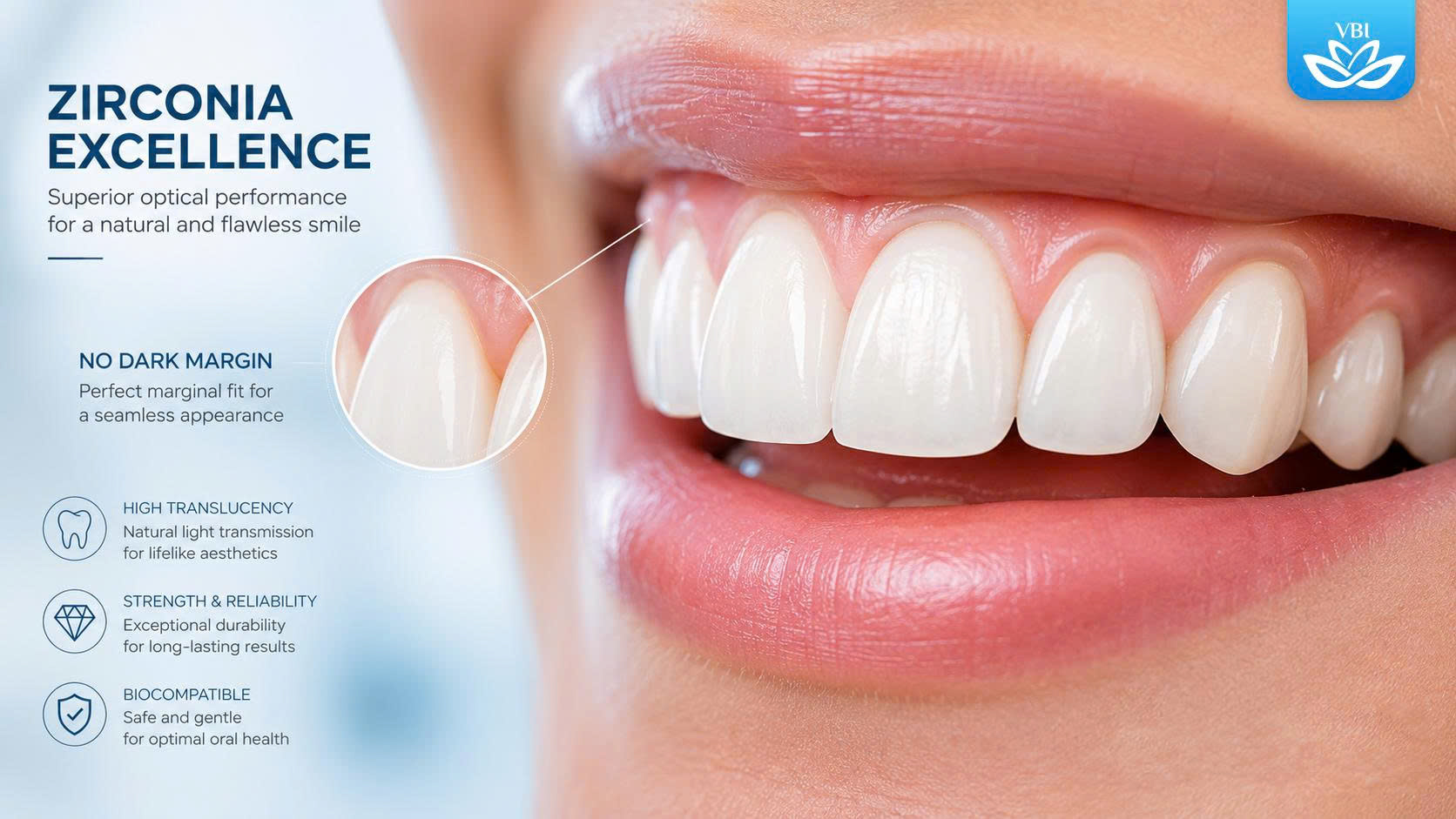
Zirconia completely circumvents the aesthetic limitations of metal. Its natural, tooth-like white color guarantees that absolutely no dark shadows will emanate through the soft tissues, even in patients with the thinnest, most fragile gingival biotypes. Recent brilliant developments in material engineering have introduced High Translucent Zirconia (HTZ), which subtly modifies the yttria content to massively enhance the material’s optical properties. HTZ exhibits a level of semi-translucency that breathtakingly mimics the natural light-scattering and light-transmission properties of human dentin and enamel. This ensures that ambient light entering the soft tissue and the restorative crown diffuses naturally, rather than being harshly blocked or unpleasantly reflected by an opaque metallic substructure beneath the gumline.
Observing a restored anterior tooth reveals why ceramic materials dominate cosmetic dentistry.
Categorizing Types of Dental Implants for Clinical Success
Selecting the correct fixture requires precisely matching material properties to your unique anatomical constraints. We systematically categorize the clinical indications for both types of dental implants to ensure maximum surgical predictability. Titanium dominates full-arch reconstructions, posterior load-bearing zones, and narrow interdental spaces. Zirconia excels in single-tooth aesthetic replacements and holistic protocols. Here are the precise clinical guidelines our surgical specialists utilize.
The current body of peer-reviewed scientific evidence necessitates a highly nuanced, patient-specific approach to material selection. The application of these premium materials must be strictly dictated by a careful clinical analysis of your biomechanical profile, aesthetic requirements, and immunological status. Neither material renders the other obsolete.
-
Indications for Titanium (Grade 4 and Grade 5):
-
Posterior Load-Bearing Zones: Titanium is mandatory for areas subjecting the implant to maximum vertical and lateral masticatory forces. If you exhibit bruxism or severe clenching habits, the ductility of metal is required to prevent fracture.
-
Full-Arch Rehabilitations (All-on-4): Procedures that necessitate severely angled implant placement (up to 45 degrees) require the shear strength of titanium. To understand how different manufacturers handle these stresses, you can review our guide on premium implant brands compared.
-
Narrow Interdental Spaces: Anatomical sites requiring ultra-narrow implants with a diameter of less than 3.5 mm strictly require the fracture toughness of titanium. Ceramics are too brittle at this minimal thickness.
-
-
Indications for Zirconia (Y-TZP):
-
The Anterior Esthetic Zone: Zirconia is the premier choice for single-tooth or short-span restorations in highly visible areas, particularly for patients with thin gums prone to displaying metallic shadows.
-
Documented Metallic Hypersensitivity: Patients presenting with verified clinical allergies to titanium or other trace metals must use zirconia to avoid immunological rejection.
-
Holistic Patient Preferences: Individuals actively seeking entirely metal-free rehabilitation strategies to avoid any theoretical galvanic currents or trace ionic release in the body.
-
Are you unsure which material perfectly suits your unique biological profile? Register for biocompatibility testing with our international clinical specialists today to secure your safest, most natural smile.




Bài viết liên quan
Replacing Silver Amalgam Fillings: Safe Removal Protocols for Australian Patients in Vietnam
For many patients visiting Hanoi, addressing long-standing dental concerns often includes the decision to manage...
Wisdom Tooth Extraction Recovery for Travelers: Safe Care Guidelines While in Hanoi
Navigating a dental procedure while exploring a new city requires careful planning and realistic expectations....
CBCT Scan Dental Implant Planning: Why 3D Imaging is Mandatory for Safety
Why Traditional X-Rays are Not Enough for Safe Dental Implants For patients traveling from Australia...
Piezotome Surgery Benefits: Painless Wisdom Tooth Extraction and Implants
Overcoming Fear: Modern Painless Dental Surgery is Finally Here For many patients, the mere thought...
Digital Smile Design in Hanoi: Preview Your Dream Smile Before Treatment Starts
For many international patients from Australia, New Zealand, and local expatriates in Vietnam, the decision...
Laser Teeth Whitening in Hanoi: Safe, Rapid & Bright Results
Achieve a brilliant, photo-ready smile with our professional teeth whitening hanoi services, completed in just...