
 Mon - Sun 8:00 - 19:00
Yes, premium dental implants placed in Vietnam come with a robust dental implant warranty that protects you globally. If you receive genuine Straumann or Nobel Biocare implants, you are issued an international Implant Passport. This document ensures that any authorized dentist in Australia can service your new smile, keeping your dental implant warranty fully valid without requiring a flight back to Hanoi.
The Reality of Dental Tourism and the Fear of Abandonment
Boarding a flight from Sydney or Melbourne to Hanoi for major dental surgery is a significant decision. You are likely saving up to 70% compared to local Australian prices, avoiding the financial strain of dipping into your superannuation, and bypassing the massive out-of-pocket expenses that Medicare simply refuses to cover.
However, we understand the heavy anxiety that often sits at the back of your mind. Local Australian dentists and the ADA frequently issue stern warnings about dental tourism. Their primary argument? Abandonment. They suggest that if you experience a complication once you are back home, you will be left entirely on your own, with local clinics refusing to touch “cheap overseas work.”
If you choose a clinic that cuts corners by using generic, untraceable titanium screws, that warning is absolutely correct. But when you partner with a clinic that prioritizes elite clinical standards and utilizes heritage implant brands, that narrative crumbles. Securing proper overseas dental aftercare is not about hoping for the best; it is about relying on a documented, legally binding global network backed by a solid dental implant warranty.
This guide will demystify exactly how cross-border aftercare functions, how your biological healing process works, and how our remote support network ensures you are protected for decades to come.
The Complete Overseas Dental Aftercare Guide
The long-term success of your new smile is a collaborative effort. The surgical precision happens in our Hanoi clinic, but the critical healing phase—known as osseointegration—happens while you are recovering in your hotel and, eventually, back home in Australia.
Osseointegration is the biological process where your living jawbone physically fuses with the titanium implant, essentially locking it into place like a natural tooth root. To ensure this process happens flawlessly and to maintain your dental implant warranty, we strictly adhere to the post-operative guidelines established by The Complete Overseas Dental Aftercare Guide, the global authority on implant dentistry.
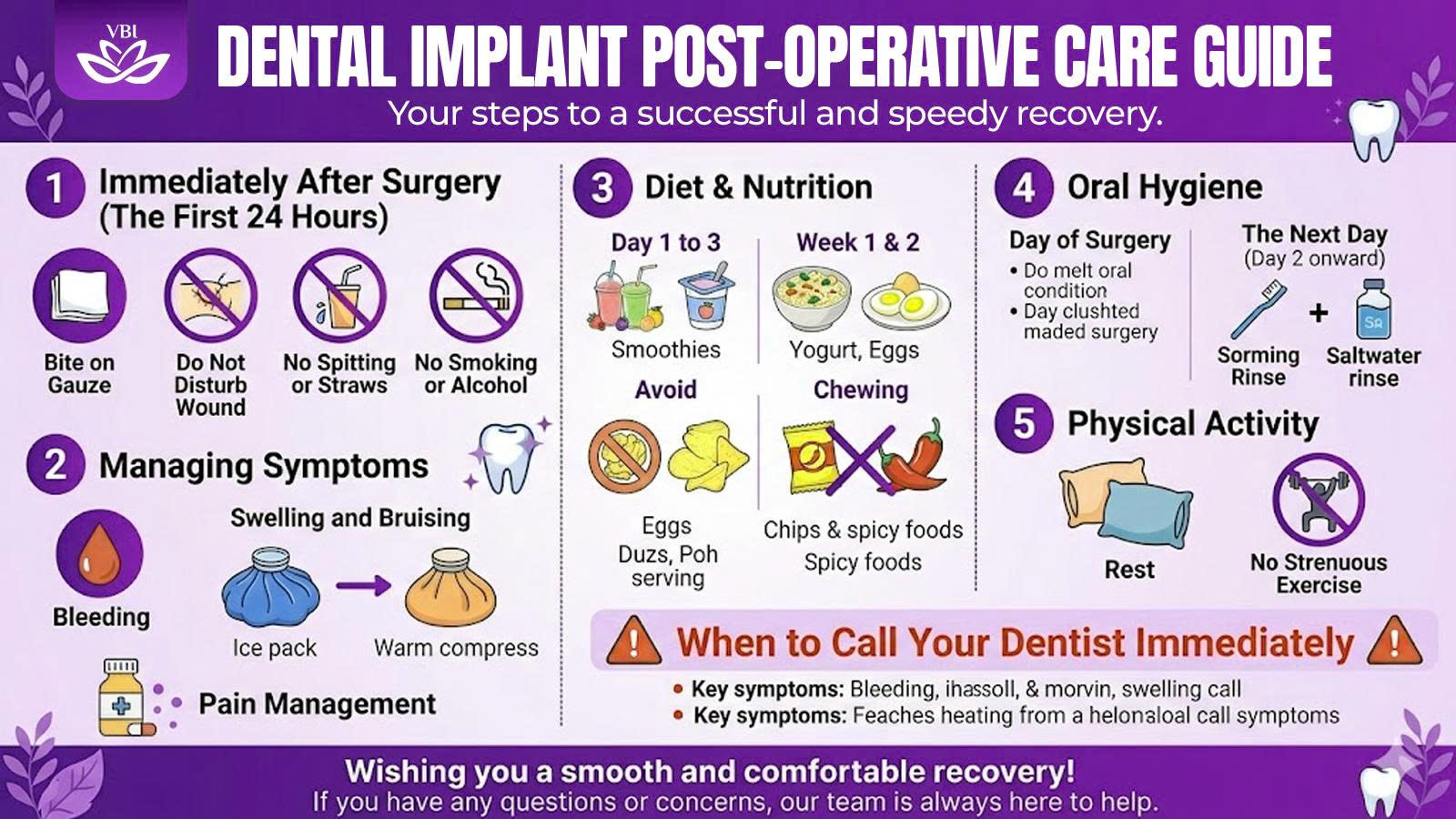
Immediate Healing: The First 48 Hours
The first two days are critical for establishing a stable blood clot inside the surgical site. This tiny clot acts as the biological scaffolding where bone-building cells (osteoblasts) will begin their work.
To protect this fragile scaffolding, you must follow these clinical directives:
-
Zero Rinsing: You must entirely avoid rinsing your mouth, spitting forcefully, or drinking through a straw for the first 24 hours. The suction created in your mouth can dislodge the blood clot, leading to a painful condition and delayed healing.
-
The Saltwater Protocol: Starting on day two, you will transition to gentle warm saltwater rinses. Mix half a teaspoon of regular salt into a cup of warm water and hold it gently over the surgical site for a few seconds before letting it fall out of your mouth. Do this four to five times a day. This natural, hypertonic solution keeps the area free of bacteria without using harsh, chemical-heavy mouthwashes that can irritate young, healing tissues.
-
Dietary Restrictions: Your titanium implant needs absolute stillness to fuse with the bone. Any tiny movements (micro-movements) caused by chewing hard foods can disrupt the bone fusion, causing the body to grow soft scar tissue around the implant instead of solid bone. Stick strictly to a soft, nutrient-rich diet—think smoothies, mashed potatoes, and soft local soups—for the timeline specified by your surgeon.
The Absolute Ban on Nicotine
If you take only one piece of medical advice from this guide, let it be this: smoking is the ultimate enemy of dental implants.
Nicotine aggressively shrinks your blood vessels (vasoconstriction). Your healing gums and bone rely entirely on a robust micro-blood supply to deliver oxygen and immune cells to the surgical site. When you smoke, you essentially choke off this blood supply. This dramatically increases your risk of infection and is the leading cause of early implant failure. We strictly advise stopping all tobacco use well before and long after your surgery.
To ensure you are never left guessing about your recovery steps once you board your flight back to Sydney or Melbourne, we provide a comprehensive, printed recovery manual immediately following your procedure.
Decoding the International Dental Implant Warranty
Many patients want to find out: does an international dental implant warranty cover dental implants from Vietnam?
The straightforward answer is yes, provided your clinic uses top-tier, globally recognized systems. We refuse to compromise on the materials implanted into your jaw. By exclusively utilizing heritage brands, we ensure you receive the exact same clinical safety net and dental implant warranty you would get at a premium clinic in Brisbane or Perth.
Straumann and Nobel Biocare: The Global Safety Net
When we place a Swiss-engineered Straumann implant or an American/Swedish Nobel Biocare implant, you are protected by the manufacturer’s global policies:
-
Lifetime Fixture Guarantee: Both Straumann and Nobel Biocare provide a lifetime guarantee on the titanium implant fixture itself. If the implant ever fails to integrate or fractures in the bone, the manufacturer replaces the implant entirely free of charge.
-
Restorative Component Coverage: The abutment (the connector piece) and the screws are also covered. Nobel Biocare offers a lifetime warranty on non-temporary restorative components, while Straumann offers comprehensive 10-year to lifetime coverage depending on the specific metal or ceramic abutment used.
The Power of the Implant Passport
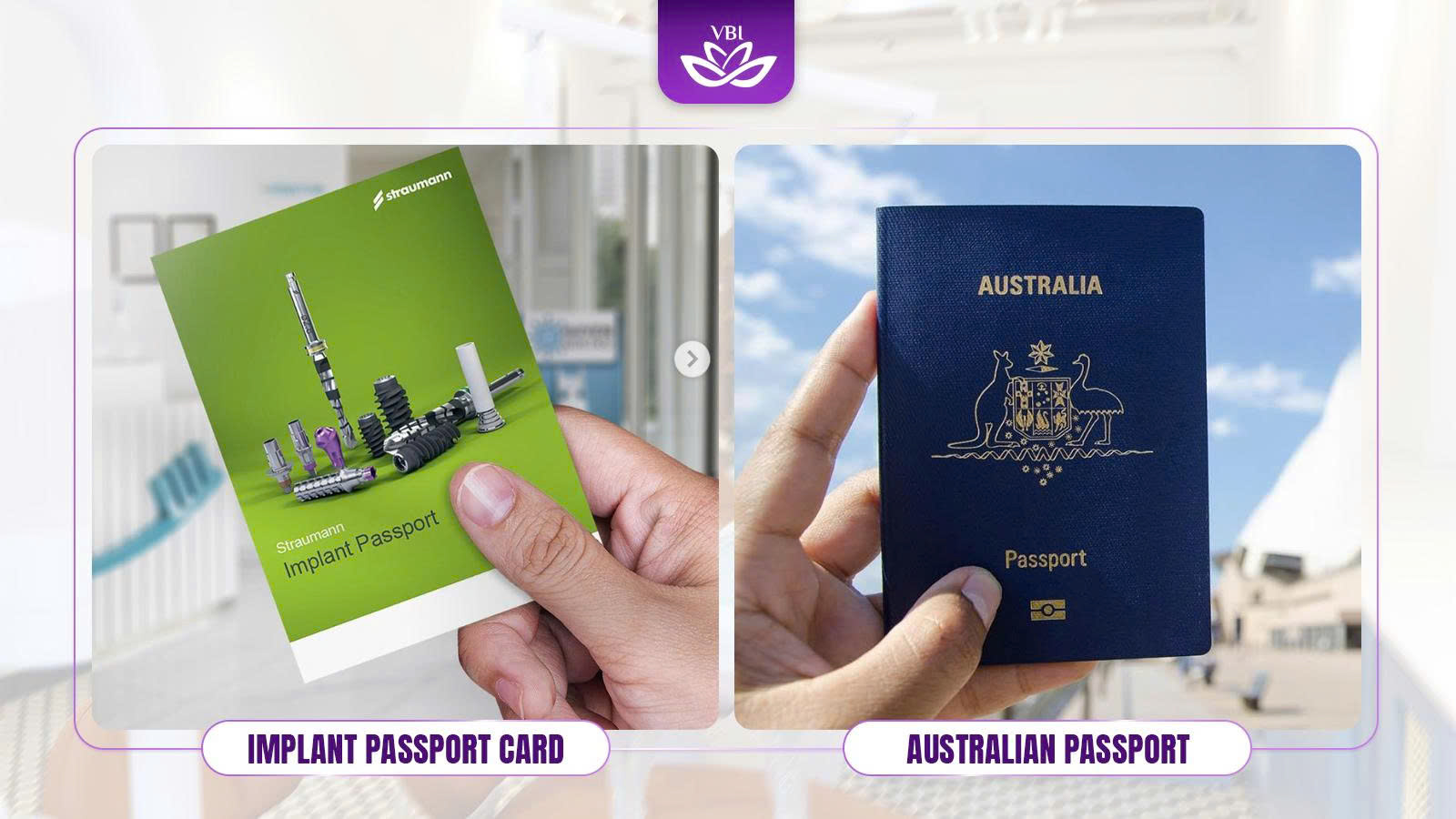
How does an Australian dentist know what is in your mouth? Through the Implant Passport.
At the conclusion of your treatment in Hanoi, you will not just leave with a new smile; you will leave with a physical medical document. This passport contains highly specific, globally standardized data: the exact manufacturer, the implant diameter, the thread length, the specific internal connection type, and the unique lot/batch numbers of the sterile components used in your surgery.
This seamless cross-border coordination is made entirely possible by a single, internationally recognized document that travels safely alongside you.
Fixing Overseas Dental Work in Australia: The Exact Protocol
Let’s look at a practical, real-world scenario. Imagine it is two years after your successful trip to Vietnam. You bite down awkwardly on a piece of hard crackling at a family barbecue, and you feel a slight click. A component feels mildly loose.
Do you need to book an emergency flight to Hanoi? Absolutely not.
Here is our protocol for fixing overseas dental work in Australia, step-by-step:
| Step | Patient Action | Clinic / Network Action |
| 1. Remote Assessment | You send a quick WhatsApp message to our dedicated international support team describing the issue. | Our English-speaking specialists review your file, assess the symptoms, and confirm it is likely a minor mechanical issue (like a loosened abutment screw). |
| 2. Local Coordination | You schedule a brief visit with a local, certified Straumann or Nobel Biocare provider in your Australian city. | We provide you with your digital records and X-rays to easily forward to the local clinic ahead of time. |
| 3. The Passport Handoff | You walk into the Australian clinic and hand the dentist your Implant Passport. | The Australian dentist reads the lot numbers, immediately identifying the exact proprietary screwdriver and torque settings needed. |
| 4. The Fix | You sit in the chair for 10 minutes while the dentist tightens the screw. | Your dental implant warranty covers the replacement parts (if a screw fractured), and you only pay the local dentist their standard, minimal chair-time fee for the adjustment. |
This process completely neutralizes the “abandonment” myth. Because we use elite, traceable materials, any highly trained dentist in Australia has the exact tools required to service your teeth.
Protecting Your Investment: Avoiding the Traps
The only time overseas dental aftercare becomes a nightmare is when patients fall victim to clinics offering “too good to be true” pricing.
If a clinic is offering full-arch rehabilitations at suspiciously low rates, they are likely using generic, clone implants manufactured by obscure, regional companies. These generic screws do not have international distribution networks. If you return to Australia and one of these generic screws loosens, your local dentist will look at the X-ray, fail to recognize the brand, and refuse to touch it. They will not have the specific screwdriver required, and attempting to fix it with the wrong tools could strip the metal, ruining the entire implant.
In that scenario, your only option is to fly back to the original clinic. This is why understanding the materials being placed into your body is vital to avoiding a massive financial trap, which we detail further in our breakdown of the 5 hidden costs of dental tourism.
By investing slightly more upfront in heritage brands, which you can read about in our guide to the top dental implant brands in Vietnam, you are essentially buying a lifelong, international insurance policy for your mouth.
Long-Term Maintenance: Preventing Peri-Implantitis
Beyond mechanical adjustments, the longevity of your warranty and your implants relies heavily on your daily hygiene. While titanium cannot get cavities, the living gum tissue surrounding the implant is still vulnerable to bacterial infection, a condition known as peri-implantitis.
Unlike natural teeth, which are surrounded by a highly vascularized periodontal ligament that fights off infection, implants sit directly against the bone. If plaque is allowed to accumulate at the gum line, the resulting inflammation can travel rapidly down the threads of the implant, eating away at your jawbone.
To prevent this and keep your dental implant warranty in good standing, you must treat your implants with rigorous care:
-
Brush twice daily with a soft-bristled brush.
-
Use a water flosser on a low setting to flush out food particles trapped under the prosthetic bridge.
-
Visit your local Australian hygienist every 4 to 6 months.
When you visit your local hygienist, your Implant Passport is once again crucial. Traditional stainless steel scraping tools can scratch the soft titanium surface of your implant, creating microscopic grooves where bacteria love to hide. By showing your hygienist your passport, they will know to use specialized, implant-safe polymer or titanium scaling instruments to clean your teeth without causing structural damage, thus preserving your dental implant warranty.
Peace of Mind Across Borders
Choosing to travel for dental rehabilitation should relieve your financial stress, not replace it with medical anxiety. At Viet Bi Dental Clinic, our relationship with you does not end when you walk out of our doors in the Hanoi Old Quarter; that is simply where the maintenance phase begins.
Through uncompromising clinical standards, transparent international dental implant warranty protocols, and a commitment to lifelong remote support, we bridge the gap between Southeast Asia and Australia. You get the smile you deserve at a price that makes sense, backed by the security of a global medical network.
Are you ready to explore a risk-free path to restoring your dental health? Join our remote patient support network today and let our specialists build a personalized, globally protected treatment plan just for you.




Bài viết liên quan
CBCT Scan Dental Implant Planning: Why 3D Imaging is Mandatory for Safety
Why Traditional X-Rays are Not Enough for Safe Dental Implants For patients traveling from Australia...
Piezotome Surgery Benefits: Painless Wisdom Tooth Extraction and Implants
Overcoming Fear: Modern Painless Dental Surgery is Finally Here For many patients, the mere thought...
Digital Smile Design in Hanoi: Preview Your Dream Smile Before Treatment Starts
For many international patients from Australia, New Zealand, and local expatriates in Vietnam, the decision...
Laser Teeth Whitening in Hanoi: Safe, Rapid & Bright Results
Achieve a brilliant, photo-ready smile with our professional teeth whitening hanoi services, completed in just...
Painless Teeth Scaling in Hanoi Old Quarter: Viet Bi Premium Experience
Disclaimer: This content is for informational purposes only and does not constitute professional medical advice....
How Long Do Implants Take? 7 Essential Timeline Facts
Patients frequently ask how long do implants take from the initial surgery to the final...